Four candidates say yes to fire rules and reserves. Where they split: How much to build and how fast.
(CLAIR | Simi Valley, CA) — Four candidates for Simi Valley mayor mostly agreed on wildfire rules, power shut-offs and city finances at a Sept. 30 forum organized by the Simi Valley Chamber of Commerce. Housing and growth is where their answers split.
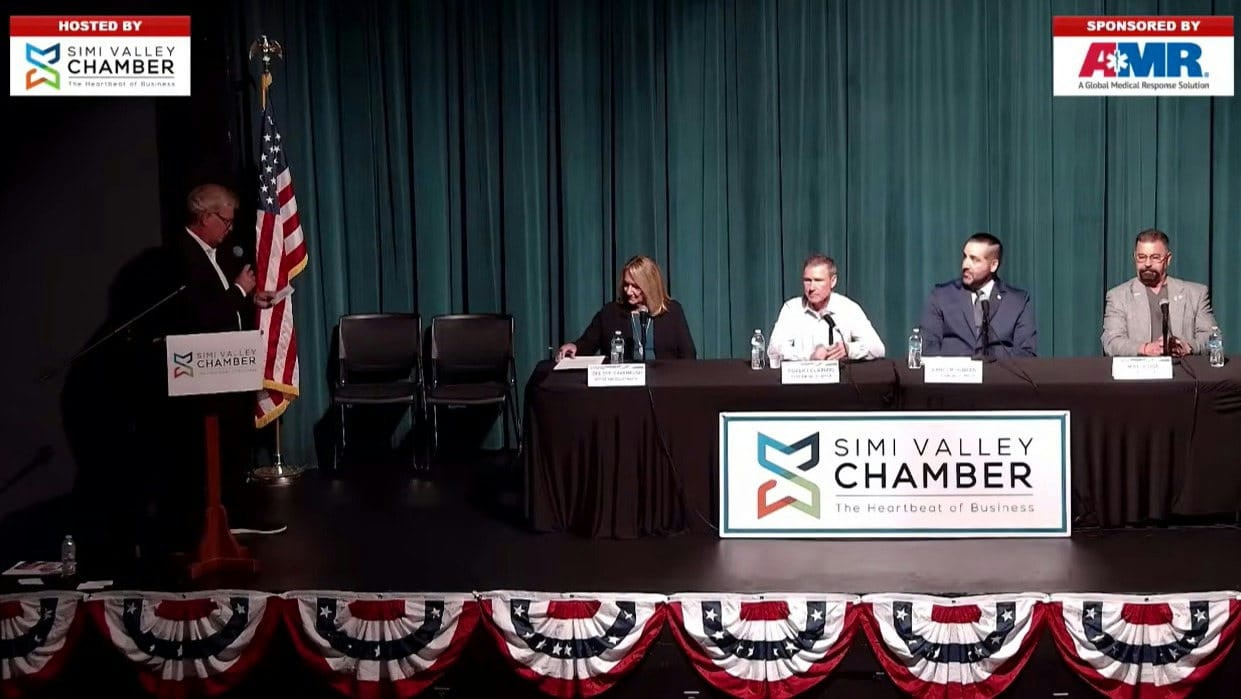
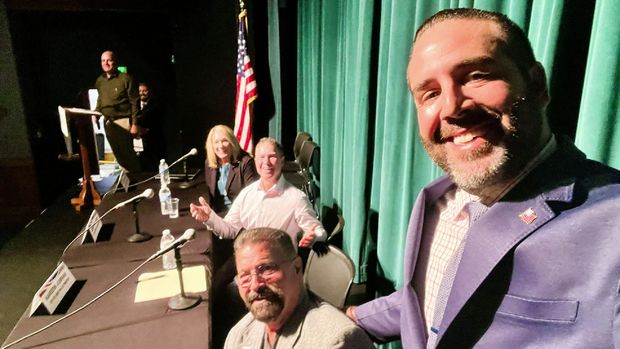
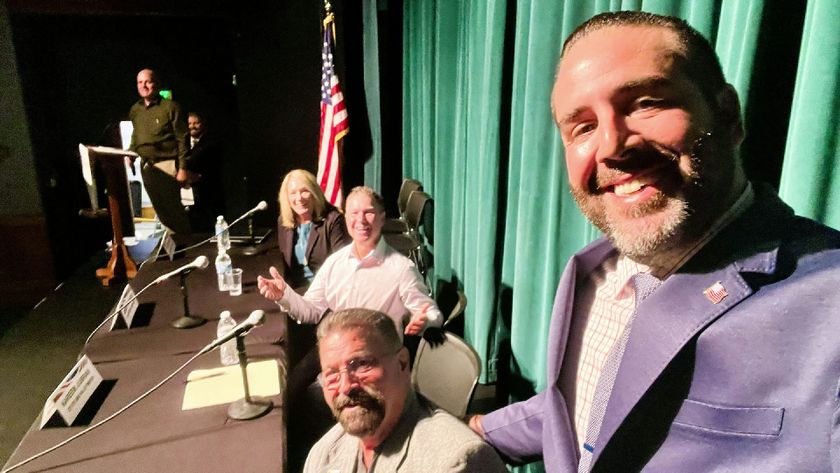
Current Mayor Dee Dee Cavanaugh, City Council member Mike Judge, former mayoral candidate Robert Clarizio and Simi Valley Unified School Board Trustee Kareem Jubran took part in the forum at the Simi Valley Cultural Arts Center. Wayne Hampton Holland III is also on the ballot but did not attend.
The chamber's director of tourism and government affairs, Anthony Angelini, opened the event by remembering former Mayor Fred Thomas, who died in January after serving since November 2022. Cavanaugh was appointed to fill his seat.
"Whoever takes the seat next will inherit more than just an office," Angelini said. "They will inherit the responsibility of living up to the legacy that Fred left behind."
The forum was livestreamed and recorded. Candidates had one minute for opening statements and one minute per question. Community members Bill Klepper and Brian Dennert joined Angelini as moderators.
Cavanaugh called economic development the backbone of the community and said she would review city permitting to make it easier for businesses. She also proposed a Vision 2050 planning effort modeled on an earlier project by former Mayor Greg Stratton.
Clarizio, a vocal cord cancer survivor, asked the audience for patience with his voice, which was damaged during treatment.
Jubran, who grew up in Simi Valley and works as a construction engineering executive, said he brings a fact-based approach to decision-making.
Judge, a retired LAPD officer and 16-year council member, said Simi Valley is a city that still has a small-town feel, but it is in a tight geographic location. He said he would keep fighting state mandates he believes hurt the city.
Where the candidates agreed
On wildfire safety, all four agreed that emergency preparedness and home hardening are essential to protect properties. Regarding the state's new Zone 0 rules, which require ember-resistant materials within five feet of a structure, Judge said homeowners will have to comply when they sell and noncompliance could affect insurance.
On power shut-offs by Southern California Edison, all four said the utility needs to do more to harden its lines and the city should keep pressing state regulators. Jubran noted that shut-offs spoil groceries, darken intersections and hurt business recruitment. Judge said wind events in the city's northeast have prompted shut-offs every October and November for seven years. Clarizio said the city should also consider using alternate power options such as microgrids.
On city finances, the candidates agreed that reserves must be strong and public safety comes first. Judge said the city has been fiscally conservative and cited outsourcing as a way to save money without layoffs. Jubran said he would protect police, the senior center and the library, and look for savings in landscape watering and delayed purchases. Cavanaugh pointed to her finance background and said the city has strong reserves and an emergency fund. Clarizio said he would protect public safety and cut events first.
Where they split: housing and growth
Moderators asked whether the city should build beyond state requirements to help young families afford homes, citing an aging population.
Jubran said he supports a mix that fits the city's character, pointing to infill projects and detached condos of about 1,500 square feet that families can own.
Judge said the city must avoid overcrowding. It has little room to build and doesn't build on hillsides under its hillside protection act. About 800 housing units are in the pipeline, but developers face financing problems and state requirements, he said. Some projects have been stalled for 13 years.
"The developments can't be big, and they can't be huge," Judge said. "Traffic won't handle it. Our infrastructure is limited."
He also noted that the market, not the city, sets prices, and urged first-time buyers to check the city's new homebuyer program.
Cavanaugh said the city should encourage older residents to move out of single-family homes so young families can buy them. "That's part of our problem here, is our seniors aren't moving out," she said. Two projects are in the pipeline, she said: one with senior condominiums and one with senior living that offers care.
Clarizio said the need for housing has dropped by almost 20% in recent years. He agreed that local children should have an easier path to affording a home, but said the city is not ready for more development.
"Talk about all this development and our street lights don't work. ... Our roads need improving," he said. "It's a city that's not ready."
Earlier in the forum, candidates named different quality-of-life priorities. Clarizio pointed to schools, saying the city approves development without asking where new students will go. Jubran named affordability, from groceries and gas to housing, and said younger generations need to believe they can afford to live here. Judge named safety as the foundation for business and family life. Cavanaugh named housing variety and said some of her friends' children and grandchildren have moved away because they can't afford to stay.
"We don't build the housing, but we work with the developers that do," Cavanaugh said. "We have to find the answer and bring those two things together."
CLAIR will publish separate articles on the City Council and school board races.
Ballots for the Nov. 3 election are about to arrive in the mailbox. Voters can research candidates and measures before voting.