When the Fire Gets Steep, These Are the Ones Who Answer.
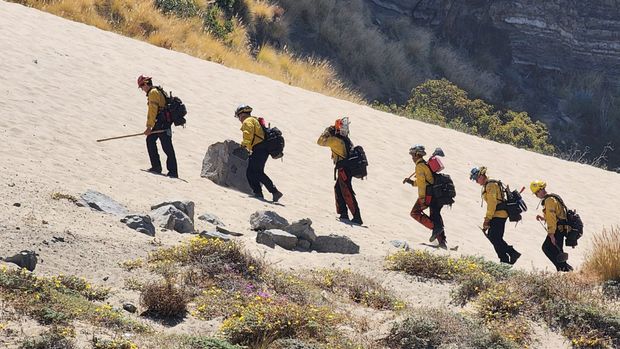
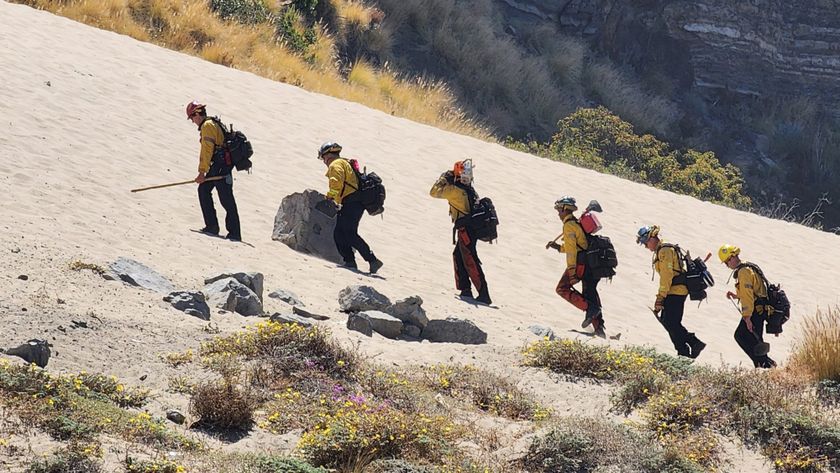
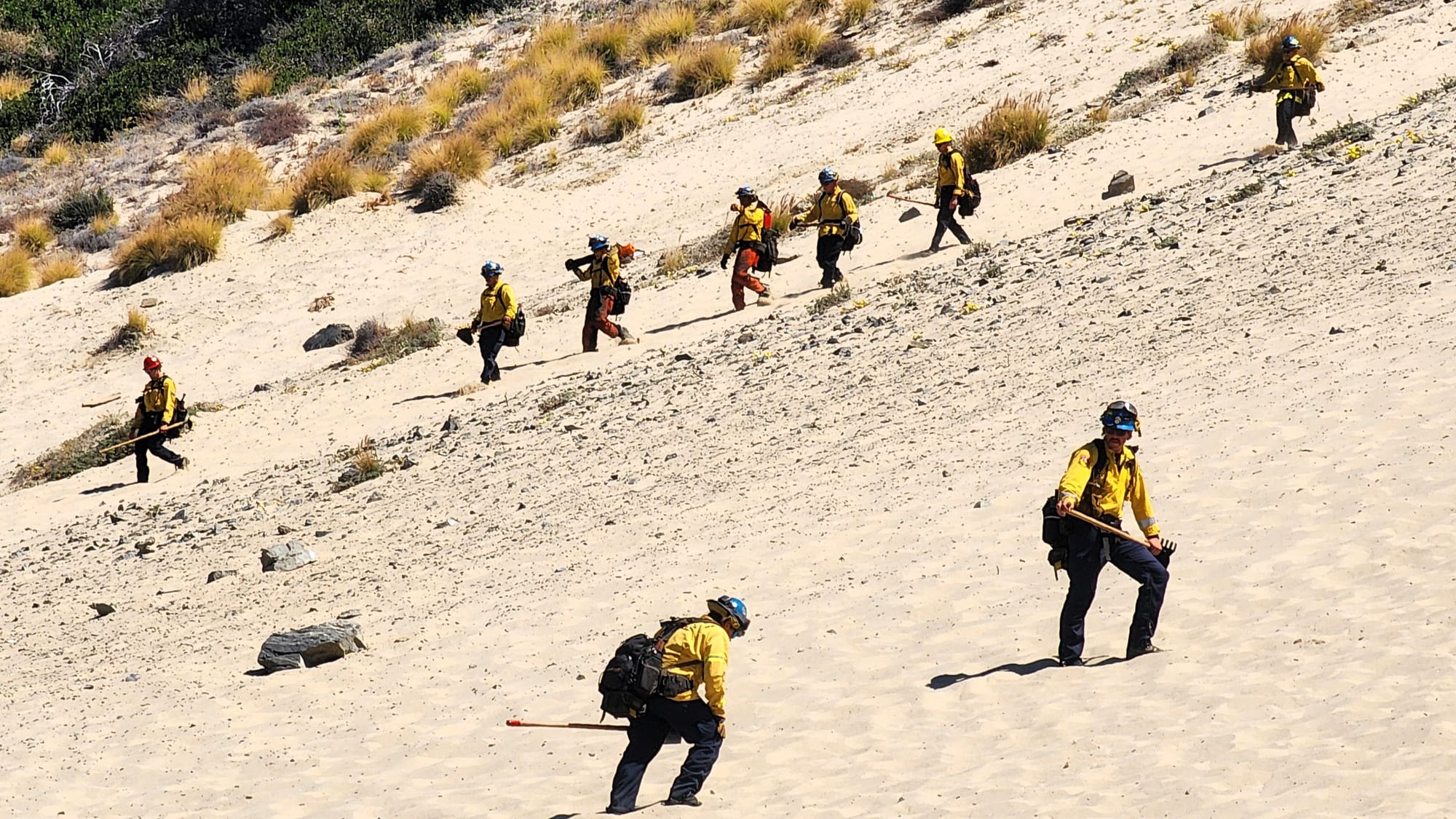
(CLAIR | Ventura County, CA) — Yellow-suited firefighters climbed single file up the steep face of Thornhill Broome Dune Thursday morning, axes and hand tools catching the light as they powered through conditioning drills that prepare them for California's wildfire reality.
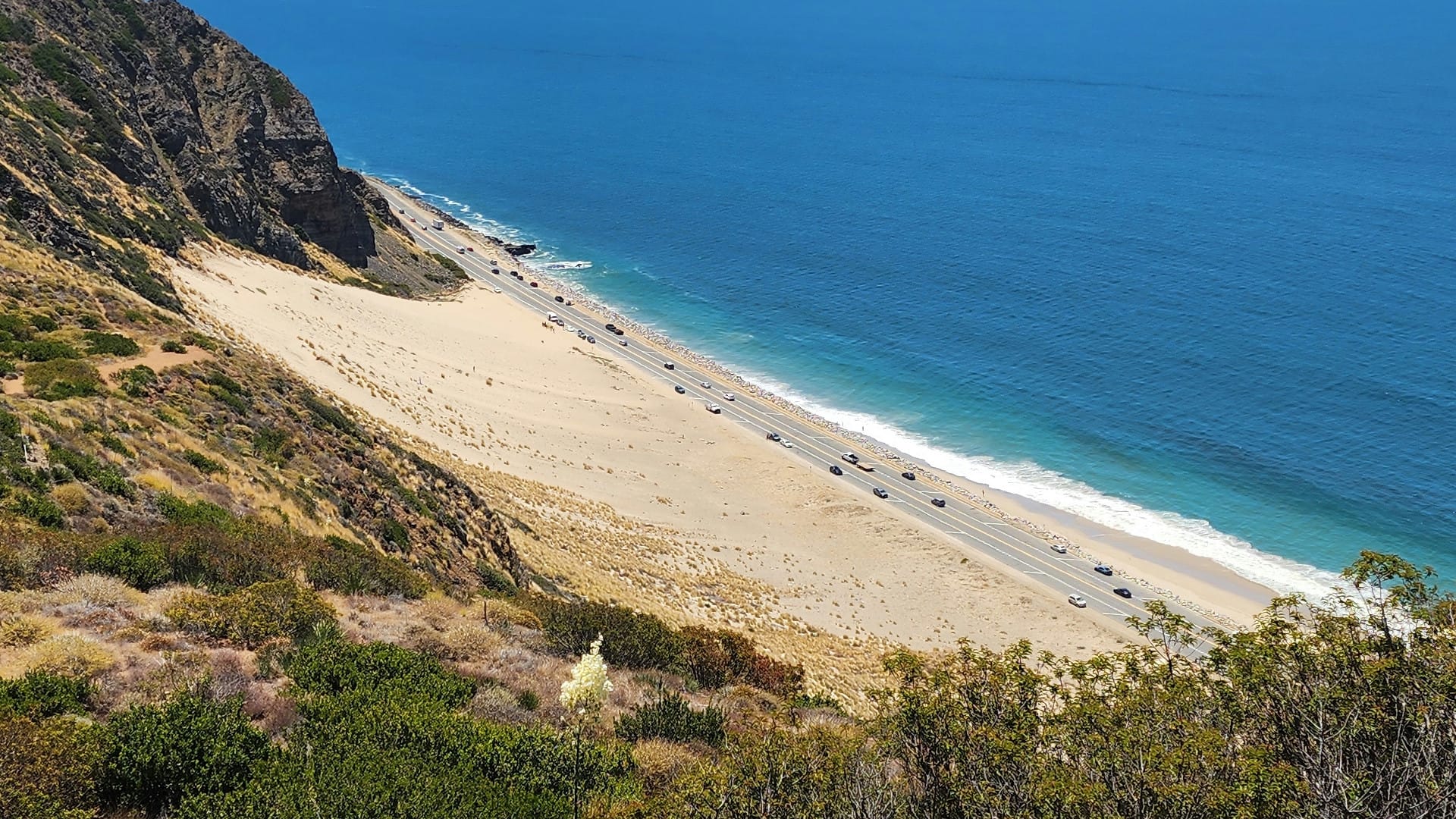
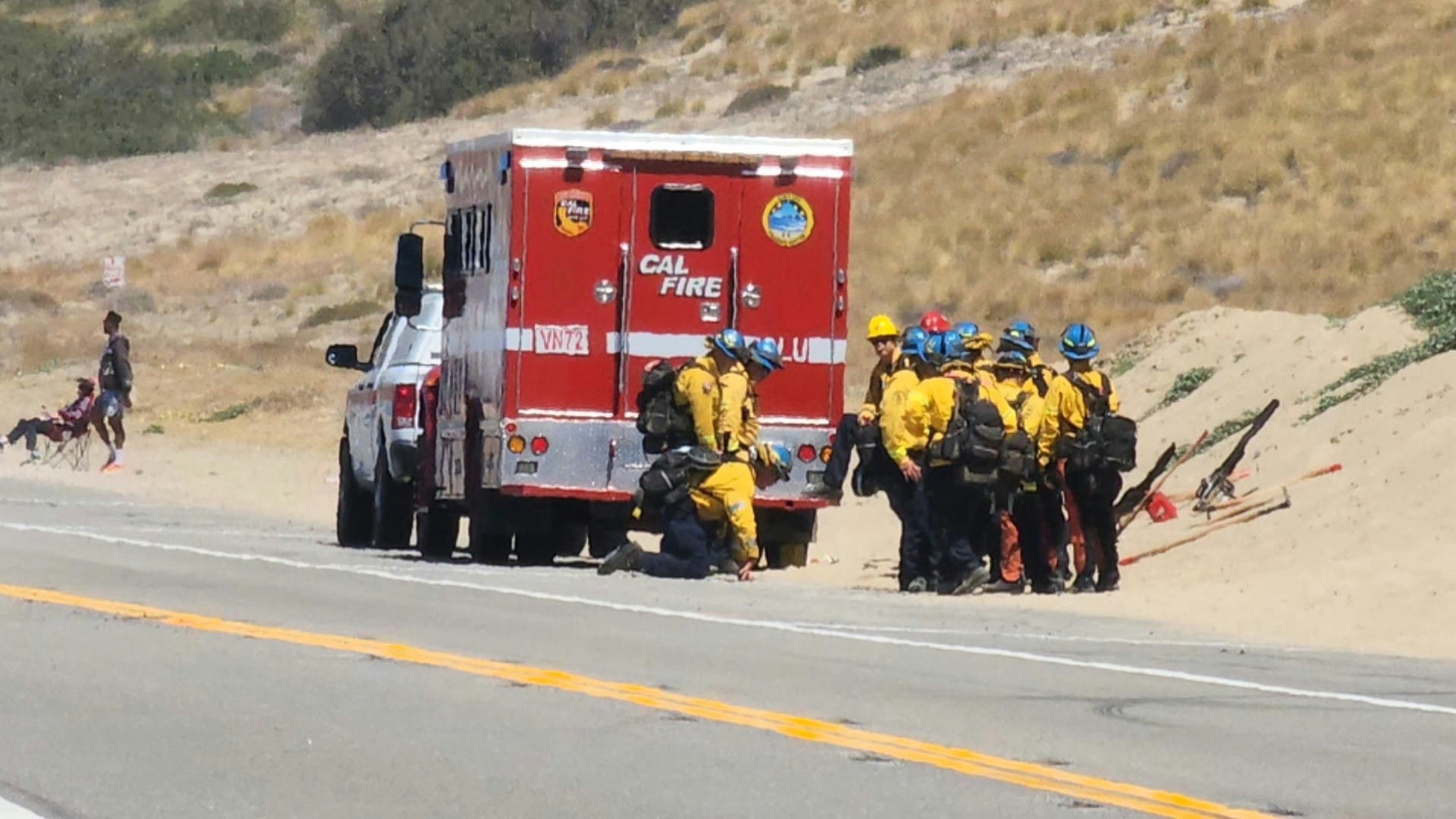
The Ventura Fire Crew, working with Cal Fire, was staged just north of Sycamore Canyon Campground along Pacific Coast Highway. Their red transport truck sat nearby as they repeatedly climbed and descended the massive coastal dune — building the physical toughness that becomes critical when fires break out in terrain no engine truck can reach.
The timing carried extra weight. While crews trained on the coast, Ventura County firefighters were simultaneously attacking the Lesser Fire, a brush blaze that ignited near Newbury Park High School around 8:50 a.m. Ground crews deployed hose lines while hand crews constructed control lines down to mineral soil using hand tools, removing vegetation to create barriers against fire spread. Firehawk helicopters made water drops from above.
The Backbone of Fire Defense
Hand crews form the foundation of California's wildland fire response. Unlike engine companies that work from paved roads, these teams deploy on foot into rugged backcountry with shovels, pulaskis and chainsaws. They dig fire control lines in places vehicles cannot go.
Ventura County Fire Department operates four crews of 12 members each, including crew bosses. The department describes hand crew positions as "sought-after" and strong entry points into fire service. Some members stay long-term because they value the demanding work.
These civilian crews work alongside a separate program that offers formerly incarcerated individuals paths into firefighting careers. The Ventura Training Center, operated through partnerships between Cal Fire, the California Conservation Corps and state corrections officials, runs an 18-month certification program.
The program accepts trainees who served in fire camps or institutional firehouses. It includes basic training, advanced certification courses, and a 12-month Type I Fire Crew assignment combining in-service training with fuel reduction work.
Recent Tests Close to Home
Thursday's coastal training followed a harder examination just 30 miles southeast. The Sandy Fire broke out May 18 in hills above Simi Valley. According to news reports, it was sparked by what investigators believe was a collision between a tractor and rock.
To slow the blaze, hand crews hiked into steep terrain with shovels, picks and hose lines, digging down to underground heat sources to cool them and ensure complete extinguishment. The fire ultimately burned 2,183 acres before reaching 90% containment by May 26.
The work demands both physical conditioning and mental toughness. Crews must maintain effectiveness while working in remote terrain during peak heat, carrying tools and equipment up grades that challenge even experienced hikers.
Opening Doors After Incarceration
Legislative changes have expanded career opportunities for program graduates. Assembly Bill 2147, signed in September 2020, provides expedited expungement pathways for formerly incarcerated people who successfully participated as firefighters in the state's Conservation Camp Program.
The law removes significant barriers to professional licensing and permanent fire service careers. Graduates now accept positions with Cal Fire and municipal departments across California, serving as wildland firefighters in communities statewide.
Whether staffed by career firefighters building seasonal conditioning or program participants earning second chances, hand crews represent California's ground-level response to wildfire threats. Their preparation happens in places like Thornhill Broome Dune, where repetitive climbs under coastal morning light build the strength that protects communities when fire season peaks.
The crew observed Thursday was doing what hand crews do before summer arrives: preparing for work that saves lives and property when California's hills ignite. Each climb up that coastal dune represents investment in readiness that pays dividends when emergency calls come.