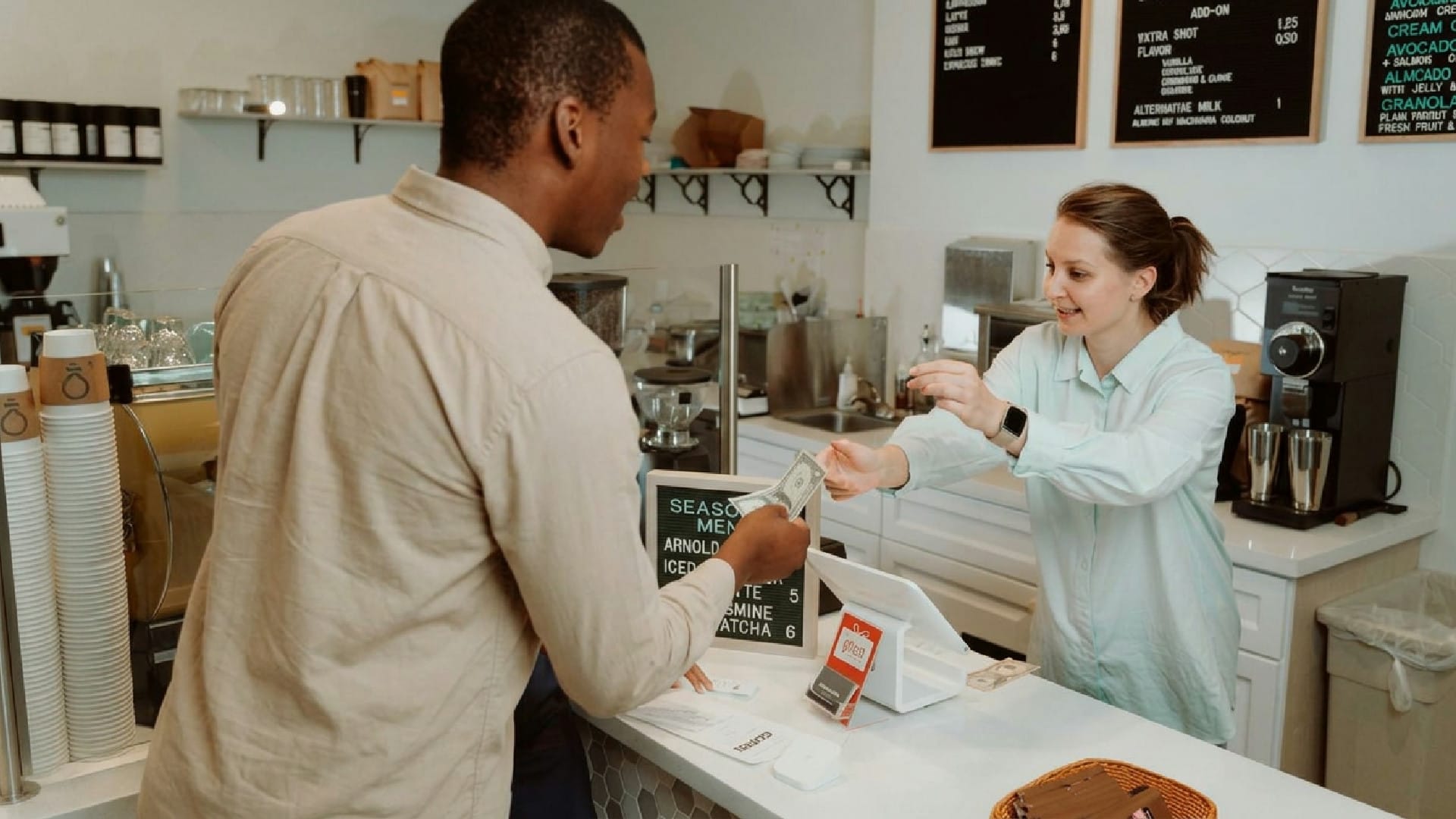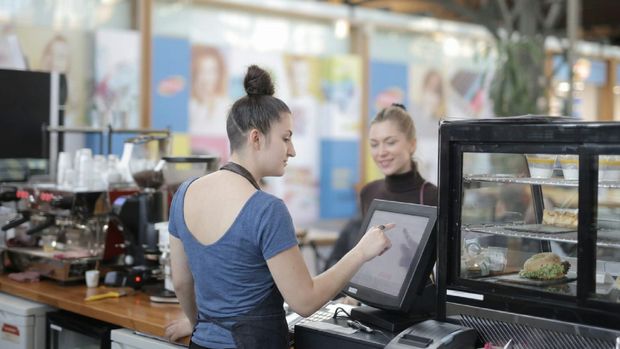
Should storefronts stop accepting cash? The debate isn't theoretical anymore.
(CLAIR | Simi Valley, CA) — Cash, card, or phone — which do you reach for first? Sometimes that choice isn't yours to make. More storefronts are asking customers to tap or swipe only, cutting cash out of the transaction entirely.
The shift is part of what the U.S. Chamber of Commerce calls cashless commerce. Businesses stop accepting paper money and coins in favor of cards, mobile wallets and digital payments. Supporters say it makes sense. Handling less cash means less risk of theft, fewer trips to the bank and faster checkout lines. It also cuts the cost of counting, storing and transporting money. The pandemic accelerated the shift. Some businesses went cashless over health concerns in 2020. A number never went back.
Nationally, cash use has been sliding for years. The Pew Research Center found in 2022 that more than 40 percent of U.S. consumers said they typically don't pay with cash at all. That's an increase of more than 10 percentage points since 2018. Tapping a card or a phone has become the default for a lot of shoppers.
But going cashless comes with a trade-off worth pausing on.
The NAACP has passed a resolution calling cashless retail a form of socioeconomic discrimination. It shuts out people who lack a bank account or credit history. The ACLU has raised similar concerns. Opening a bank account typically requires forms of ID and proof of address that many poor, elderly or unhoused people don't have.
In a 2024 CalMatters commentary, writer Kate McQuarrie followed a mother of six in Hawthorne who works at a Jack in the Box. The woman stopped using banks altogether after racking up overdraft fees she couldn't absorb. She now relies mostly on cash and check-cashing services to get by. Her situation isn't unusual. Among unbanked California households, the majority earn less than $30,000 a year, according to survey data cited in the piece.
There's also a matter of preference that has nothing to do with income. Some shoppers like the privacy of cash. Others like the built-in budgeting of spending only what's in their pocket. Some just prefer the habit of decades. Others would rather never carry cash again.
Businesses that make the switch to cashless tend to point to the same handful of reasons. Handling cash costs staff time. Money has to be counted. Discrepancies have to be reconciled. Deposits have to be made at the bank. It also closes off a common source of internal theft. Digital transactions leave an automatic record. A cash drawer is easier to skim from unnoticed.
For some owners, the decision is about safety more than efficiency. David Hart, owner of the Park Cafe and Coffee Bar in Baltimore, told the Baltimore Sun in 2017 that going cashless "was something that I felt forced into." He said the response from customers was largely positive once he made the switch.
For quick-service spots in particular, there's also a speed argument. Tapping a card or a phone is faster than counting out change. That can matter when a line is out the door during a lunch rush.
Legally, the answer depends on where you're standing. There's no federal law that forces a private business to accept cash. Under 31 U.S.C. 5103, U.S. currency is legal tender for debts. But a retail sale is treated as a separate transaction, not a debt. Stores are generally free to set their own payment policies. The Federal Reserve confirms this on its website. There's no federal statute requiring a business, person or organization to accept currency or coins as payment for goods or services.
A handful of states, including Massachusetts, New Jersey, Rhode Island and Colorado, along with cities like Philadelphia and San Francisco, have decided the choice matters enough to protect by law. California has no such law. Local businesses can legally go cashless unless a city ordinance says otherwise. For now, whether you keep the option to pay with a folded bill is entirely up to the shop, restaurant or gas station you walk into.
The shift toward cashless transactions is likely to continue. How it plays out locally will depend on whether businesses see enough pushback from customers who still want the option to pay with cash, or whether the convenience of going digital wins out.