Simi Valley District 2 council candidates Cohen and Perini take on housing, budget, water and taxes at chamber forum
Two candidates, one open seat and very different backgrounds. Here is how each answered the questions.
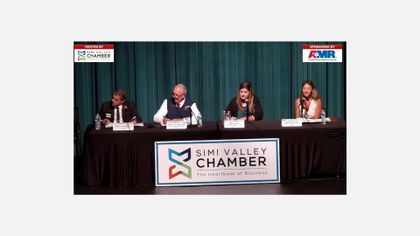
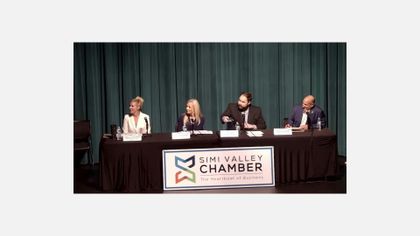
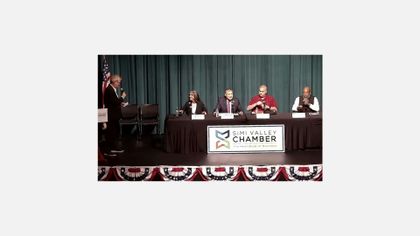
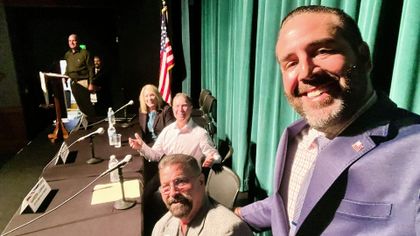
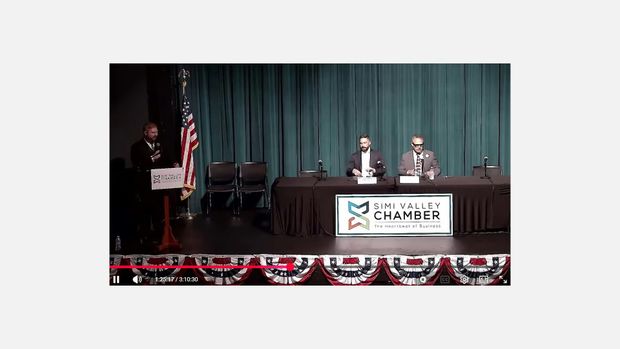
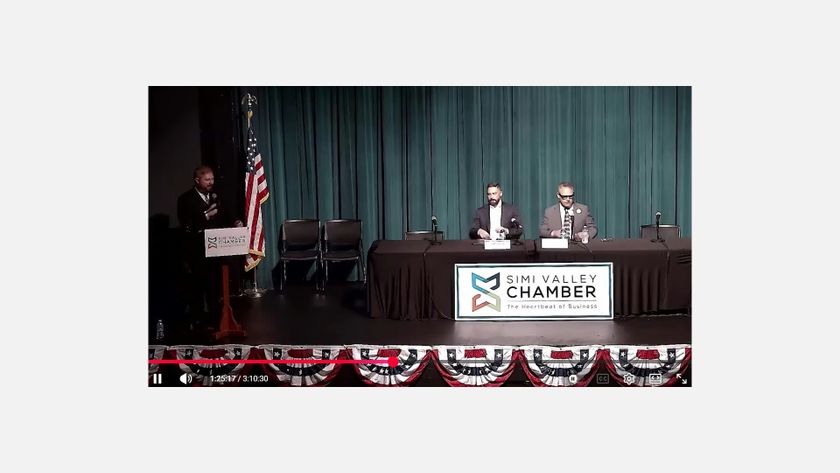
SIMI VALLEY, CA – Sam Cohen and Richard Perini, the two candidates vying for the District 2 seat on the Simi Valley City Council, answered questions on housing, the city budget, water reliability, Measure A and school resource officers at a Sept. 30 candidate forum hosted by the Simi Valley Chamber of Commerce.
Anthony Angelini hosted the event, and Brian Dennert and Bill Klepper served as moderators. The forum also featured candidates for mayor, council Districts 1 and 4, Simi Valley Unified School District trustee and Ventura County Board of Education Area 4. This is one of several stories from the evening.
Each candidate opened with an introduction. Cohen, an engineer for more than 20 years, said he is running because he is raising his child in Simi Valley and wants the next generation to know the same city he does.
"They deserve a safe Simi Valley with reliable roads, solid power infrastructure, big opportunities," he said. He said he has managed multimillion-dollar projects and budgets and has held large teams accountable for measurable results. "I know how to get complex problems solved," he said, adding that he would hit the ground running on day one. His campaign website says he has served as a board member and chair of a neighborhood council, has been appointed by the city to two advisory committees and the Cultural Arts Center Foundation board, and is a PTA parent.
Perini is founder and president of Absolute Security & Technologies, a Simi Valley company that specializes in security and low-voltage systems, according to his campaign website. He said he started the business with $5,000 and built it into a multimillion-dollar organization.
"I'm here to pitch you on why I'm the guy for the job," he said. He described his main skill as the vision to bring in the right people, since the job cannot be done alone, and said the council's goal should be economic development. "We can't do anything without growing our coffers to spend money on them," he said. He said the council needs more business acumen and that he is ready for a full-time job he estimated at 30 to 40 hours a week.
Asked what housing initiatives they would support to keep young families and workers in the city, Perini said better-paying jobs are the missing piece that would make homes affordable. Keeping families close matters for health as well as the economy, he said, because grandparents tend to live happier, longer lives near their grandchildren. He has four generations of family in Simi Valley.
Cohen said nearly every family he talks to has the same story of a child graduating high school and having to leave town. "It breaks my heart every time I hear that," he said. He said the city has many apartment complexes and 4,000-square-foot houses but little in between. He said he would like to see condos, townhouses and cottage-style homes that match Simi Valley, using the city's housing element in its general plan and committing to the state housing mandate. He put the average Simi Valley home price at $800,000.
On the city budget, Cohen said his first concern is transparency. City staff does good work, he said, but residents rarely see it because the budget is a 400-page PDF few people read. He wants residents to be able to see what is coming this year and next.
His biggest worries, he said, are the city's CalPERS pension obligation and a pace of road and infrastructure work that he said is slower than it could be.
Perini said the problem is bigger than most people want to discuss. "Everybody just wants to hear sunshine and rainbows," he said, adding that higher-paying jobs and employers are leaving. He asked whether the city is reaching out to businesses to help them or waiting for them to say they are in trouble. Keeping them afloat is key, he said, because they fund infrastructure. He cited a $900 million road liability and said that at $6 million a year it would take 150 years to repave the road in front of a resident's house. The city is restricted by budget, he said, and cannot afford luxuries such as burying electrical lines or building certain parks until it fills its coffers.
On water reliability, Perini said the city is being asked to consider selling its sewage treatment plant and that he would judge a sale by its return on investment, including whether it would become a liability or an asset. He floated reclaiming water for non-potable uses such as landscaping and asked whether local groundwater could be used. He said he expects serious drought and called desalination "the only key," though it would require approval from Sacramento.
Cohen said development will add strain to infrastructure and noted that most of the city's drinking water travels hundreds of miles through the State Water Project, Metropolitan and Calleguas, so the city does not control the price. He said the council recently approved a 3.5% increase for five years that funds $52 million in pipe, tank and pump work. Over the long term, he said, he wants Simi Valley less dependent on imported water, which means expanding recycled water and taking a serious look at groundwater.
Candidates were also asked about Measure A, the hotel occupancy tax, and its effect on occupancy rates, hotel appeal and extended overnight film productions. Cohen said he is "allergic to taxes" as a general rule and that the bar for any new tax must be very high given housing costs, property taxes and gas prices. He acknowledged this is a tax on hotel stays and not on residents, and said he does not think it would affect travel much since few people compare hotel tax rates with Thousand Oaks. He said he still has questions about how much revenue it would raise and where the money would go, and called it a chance for the city to be transparent about why it needs the revenue.
Perini said he supports the measure. The city is short on maintaining its infrastructure and residents are hurt by it, he said. He described incidents, such as an elderly man struck by a falling city tree and an elderly woman who tripped on an uneven sidewalk. Because the Measure A tax does not fall on Simi Valley residents, Perini supports it. He said local hotel rates are good and he does not think guests will pass on a stay over $3.
The final question was whether they would support a sales tax increase to fund school resource officers and, if not, what their policy on the officers would be. Both said no to the tax.
Perini said he is "very much for" resource officers but does not think funding them is the city's responsibility. He said the city pays for two, so the school board should pay for the other two. Ideally, the district should have five resource officers. A positive relationship with law enforcement is key and too few officers leaves children vulnerable, Perini said.
Cohen said resource officers are incredibly important when properly trained, because they can be positive role models for students. He did not name a number, saying he would defer to the Simi Valley Police Department and the school district, working with the council, to set it.