The mayor used her annual address to show residents the workforce behind the city's services, from public safety to infrastructure
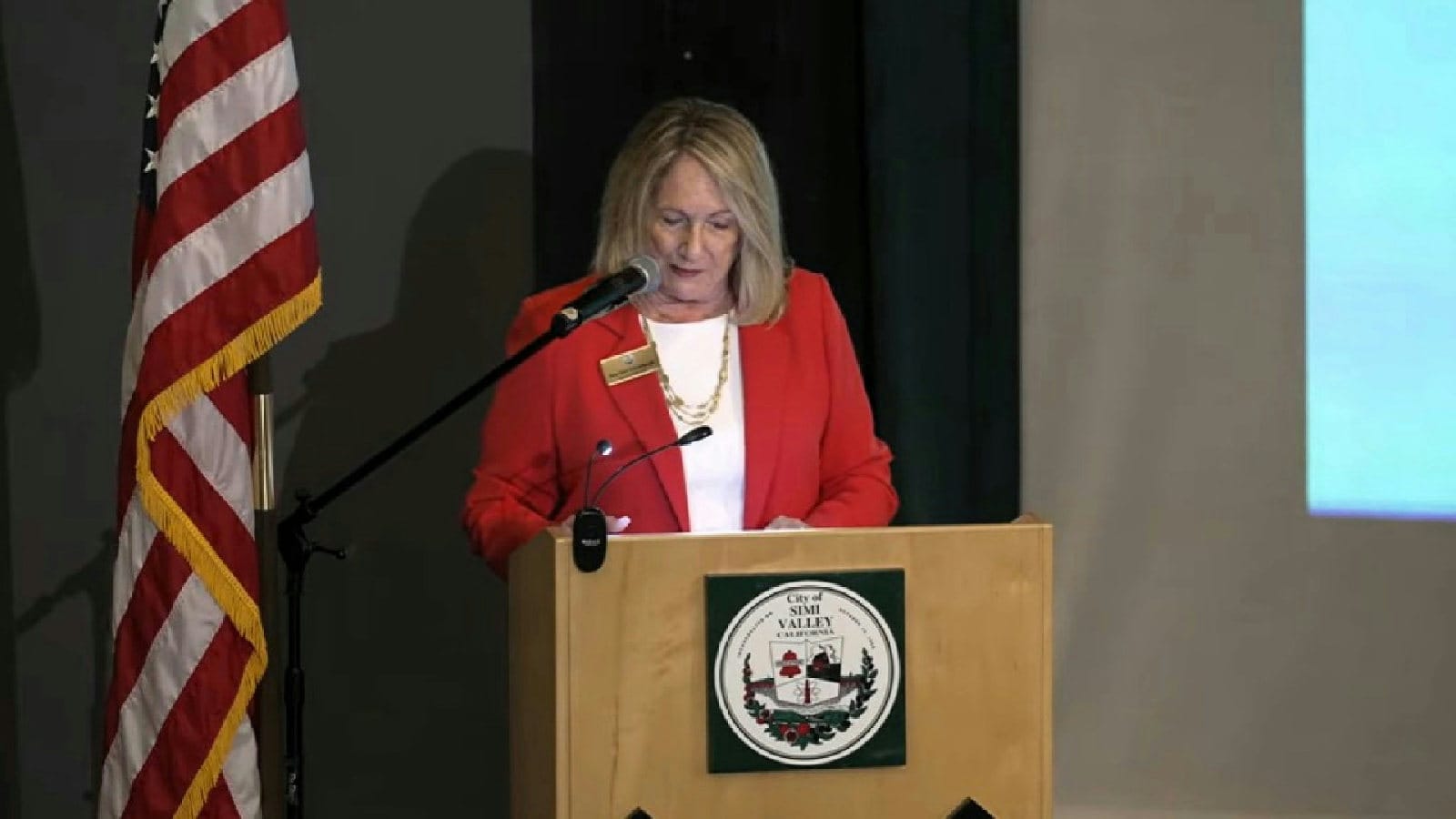
(CLAIR | Simi Valley, CA) — Behind every crime statistic, every mile of resurfaced road and every dollar in the city budget, Mayor Dee Dee Cavanaugh wanted residents to see something else at this year's State of the City address: people.
"Ultimately, everything you've seen today comes back to people, the employees and leaders responsible for turning the city's priorities into service for our community," Cavanaugh said Sept. 16 at the Cultural Arts Center. The theme ran through her entire address.
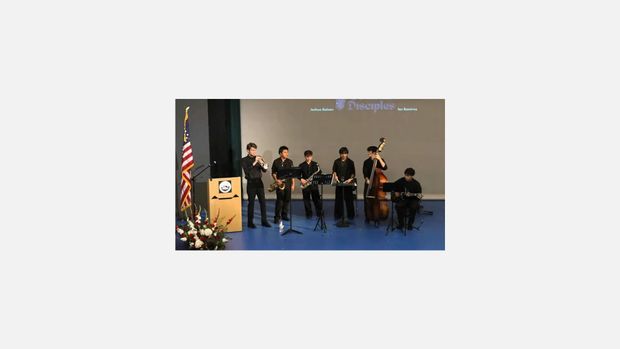
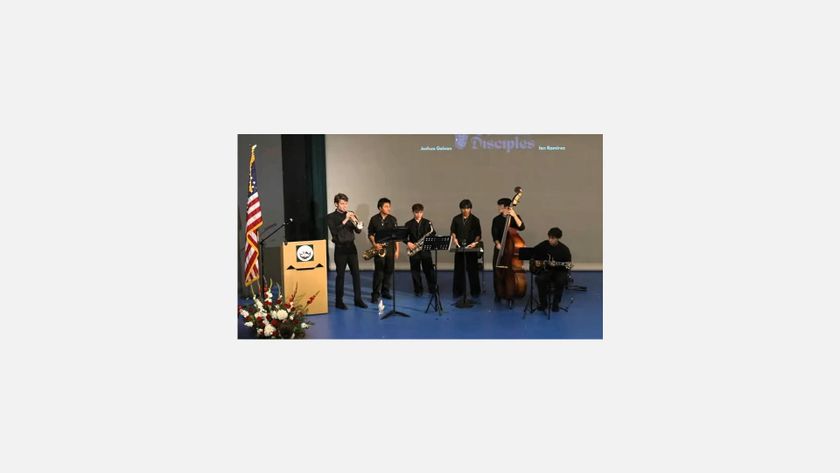
The event opened with a performance by Santa Susana High School's JazzDisciples. Simi Valley Unified Superintendent Hani Youssef told the crowd the district has 15,000 reasons to be proud of its students, the band members among them.
Cavanaugh recognized her fellow council members and thanked the Chamber of Commerce and Cultural Arts Center staff for hosting. She pointed to two public opinion polls conducted this year by True North Research. Both told a similar story: 77 percent and 78 percent of residents, respectively, rated the city's overall quality of life as good or excellent.
"Those are strong results and our entire community can be proud of them," Cavanaugh said. "That doesn't mean there aren't concerns or areas where we need to improve. Both things can be true."
Public safety came first. The police department saw reported offenses decline for the third straight year in 2025, down 6.4 percent overall. Property crime dropped 13.7 percent. Crimes against people fell 4.7 percent. Officers and dispatchers fielded nearly 100,000 incoming calls last year and responded to more than 45,000 calls for service. Response times to the most serious emergencies improved by more than a minute, down to roughly 4.5 minutes.
The department now operates nine drones flown by 15 FAA-certified pilots. They logged 457 deployment flights and 112 operational flight hours last year supporting patrol calls, critical incidents, search and rescue operations, and crash and crime scene investigations.
"The important part isn't the technology itself," Cavanaugh said. "It is what that technology allows our officers to do."
Public safety was tested directly in May, when the Sandy Fire burned more than 2,100 acres and drew about 1,400 firefighters at its height. Roughly 33,000 residents were placed under evacuation orders, with another 10,000 under evacuation warnings. The Boyle family lost the home they had lived in for nearly 40 years. Days later, firefighters searching the wreckage recovered a wedding ring.
"We are incredibly grateful to our first responders, city employees, disaster service workers, partner agencies, volunteers, neighbors and residents who came together when our community needed it most," Cavanaugh said.
The city's school resource officer partnership with Simi Valley Unified is now in its fourth decade, with two officers currently assigned to campuses. The city continues working with the school district and Rancho Simi Recreation and Park District on e-bike safety education as well.
Fiscal stability was next. The city's total adopted budget for fiscal year 2026-2027 is approximately $283.9 million. The general fund, which supports many of the services residents most closely associate with city government, accounts for approximately $100.5 million of it. The remainder covers utilities and other restricted funds. Cavanaugh credited conservative budgeting and healthy reserves for the city's AAA credit rating from S&P Global Ratings, the highest available.
Film production had a starring role in economic vitality. The city hosted 296 film production days last year. As of September 15 it had already logged 482 in 2026, a 63 percent increase that has generated an estimated $8.6 million in economic impact for local businesses, restaurants, hotels and workers. The council set a goal of promoting film production and tourism to boost the local economy. The city is now establishing a dedicated film office.
The city issued 5,714 business tax certificates last year and renewed a three-year partnership with the chamber focused on business outreach, retention and attraction. Housing development is moving forward at Lost Canyons with 364 single-family luxury homes under construction and 207 more proposed at North Canyons, alongside additional apartment and affordable housing projects.
The Town Center remains one of the city's largest economic development opportunities. Plans for its redevelopment, which would bring a mix of housing, shopping, dining and entertainment to the site, are expected to be submitted for initial review before the end of the year.
Cavanaugh also noted the city's selection as one of six West Coast markets for an expansion of the United States Hockey League, the country's premier junior hockey league.
Under community programs, Cavanaugh pointed to roughly 3,000 young people served annually through partnerships with more than 150 local businesses. The library system welcomed more than 182,000 visitors and saw nearly 38,000 items borrowed. Its 600 programs drew almost 15,000 participants. The mobile library reached close to 4,800 more people at community events and schools. The library's teen lounge reopened this year with new furniture and technology.
The senior center logged more than 165,000 participant checks and roughly 135,000 hours of programming last year. It served more than 24,000 congregate meals, delivered more than 31,000 Meals on Wheels, and distributed more than 6,000 grocery bags through its senior share food program. The work continued even after state funding for senior nutrition declined, thanks to cost savings identified by staff.
Infrastructure work is the kind residents mostly notice only when something breaks. The city's capital improvement plan for the coming year totals nearly $28 million, including about $11.2 million for waterworks, $10.2 million for sanitation and $6.1 million for streets and roads, which will fund the resurfacing of nearly 11 miles of city streets.
Public works crews maintain more than 400 miles of sewer lines, approximately 357 miles of water pipelines and more than 121 traffic signals. This year alone, crews rehabilitated more than 18,000 feet of sewer line and 26 manholes, and installed new clarifiers at the water quality control plant to replace equipment dating to the 1970s and 1980s. All 121 traffic signals are being connected through the city's Fiber City initiative, letting staff monitor the system remotely.
Waterworks District No. 8 supplies water to about two-thirds of the city's customers. Crews have been inspecting and cleaning major storage tanks while installing permanent generators at critical water facilities to guard against power interruptions. The city logged more than 26,000 hours of fixed-route transit service last year and is modernizing its fleet with six new battery electric buses and new charging infrastructure. It has secured more than $7 million in state funding toward a future regional transit center at the civic center.
Cavanaugh closed with the workforce that makes the rest happen. The city has more than 540 authorized positions. Nearly a third of employees have been with the city for more than 10 years. Last year alone, the city initiated 55 recruitments, received more than 1,900 applications, welcomed 41 new employees and promoted 26 from within. It has also issued more than 1,000 permits instantly online, cutting down on trips to City Hall.
"When there's a wildfire, it's not just an emergency services issue," Cavanaugh said. "When a business chooses Simi Valley, it's not just an economic success. When we repave the street, it is not simply a public works project. Behind each of those outcomes are employees from across the organization working together."