
Young families priced out as Ventura County loses population, births hit record lows, and housing costs outpace most local wages
They grew up in Ventura County, met here, got married here, and now, in their 30s, they're still here. They both work full time but still aren't sure they can afford the life they once imagined. Home is a studio in Thousand Oaks that runs about $2,200 a month, and every month is a stretch. Somewhere in the equation is the question of children — for now, the answer is no, not yet, maybe not at all. It isn't that they don't want a family. It's that they're still waiting for solid ground.
(CLAIR | Simi Valley, CA) — Ventura County's population peaked in 2016 and has fallen by just over 20,000 people since. The birth rate has dropped 46% since 1990. The county recorded its lowest birth rate ever in 2020, at 9.9 births per 1,000 residents, fewer than in any year since 1978, when the county had 358,000 fewer people. The rate ticked up slightly in 2021 and 2022, then fell again to 10.2 births per 1,000 residents in 2023.
Those numbers, pulled from the Ventura County Civic Alliance's 2025 State of the Region Report, were presented to the Simi Valley City Council on Aug. 10 by David Maron, the report's chairman. The biennial report, first published in 2001, compiles government and independent data across 10 categories, from agriculture to transportation, to give residents an unvarnished look at quality of life in the county. The report is free to download at CivicAlliance.org.
The shrinking, aging population has been a recurring theme in the State of the Region Report for years. The 2025 edition shows the trend deepening rather than easing. The data suggests young people and young families are the ones missing.
Undergraduate enrollment at CSU Channel Islands peaked at 6,883 students in 2018/19 and had fallen 32%, to 4,670, by 2024/25. California Lutheran University's enrollment dropped 25% from its 2019/20 peak, to 2,297 undergraduates in 2024/25. K-12 enrollment tells a similar story. The county's population nearly doubled between 1973 and 2023, from 419,500 to 838,259, but public school enrollment grew just 13% over that same half-century. In 2024/25, the county's public schools enrolled 122,810 students, the lowest total since 1994/95. State projections show enrollment sliding further before leveling off around 105,000 students in the mid-2030s, roughly what it was in the late 1970s.
Maron told the council he sees a pattern facing young adults here. The cost of living pushes many to leave the county altogether. Those who stay tend to delay having children. Those who do have kids often have fewer of them. He pointed to child care as one driver, telling the council it can cost around $15,000 a year to place an infant in care, even more for a toddler. He urged officials to look at lowering costs and locating centers closer to job hubs, calling it "a battle to keep our young people here."
The report's wage data backs up that squeeze. "Ventura County's high cost of living makes it difficult, if not impossible, for people in many lines of work to live here," the report states. A single adult needed to earn $29.59 an hour in 2024 just to cover housing, food, child care and transportation, according to the report's living-wage calculation. Average pay in food preparation, health care support, sales, building maintenance, transportation, agriculture and office support jobs all falls below that. A single parent with one child needs $52.72 an hour, more than the average pay in construction, social services or education. A household with one working parent, a stay-at-home parent and two children needs $68.39 an hour, a bar cleared by only two job categories countywide: management and law.
Those wages are not rising fast because the mix of local jobs is shifting toward lower-paying work. "With the exception of a steep decline in jobs in 2020, Ventura County's economy has added jobs every year from 2011 to 2024," the report notes. 2024 brought a record 316,350 non-farm jobs. But "what we see is that we are losing workers in the higher paid industries," Maron told the council, calling it a central challenge for local officials. From 2007 to 2024, goods-producing jobs, like manufacturing, fell 13% while service jobs grew by the same share. The average manufacturing job paid $83,490 in 2024, while the fastest-growing sectors, leisure and hospitality and education and health care, paid far less, averaging $32,387 and $56,060.
Housing remains the other half of the affordability problem. Only 14% of county households could afford the median-priced home in early 2024, compared with 37% nationwide and 17% statewide. Rents did cool in 2025. The countywide average was $2,711 a month in July, up 1.3% from a year earlier. Two-bedroom units, the most common size, averaged $2,883, up just 1.2%, the smallest year-over-year increase since 2014. The average rent in the city actually fell 2.7%.
New construction picked up. Local governments issued permits for 1,648 new homes in 2024, a 42% jump over 2023 and the most in a single year since 2017. That total still falls far below the 4,511 permits issued at the height of the 2005 housing boom. Most new construction now goes toward apartments and condos. Single-family homes made up just 30% of 2024 permits, down from 66% two decades ago.
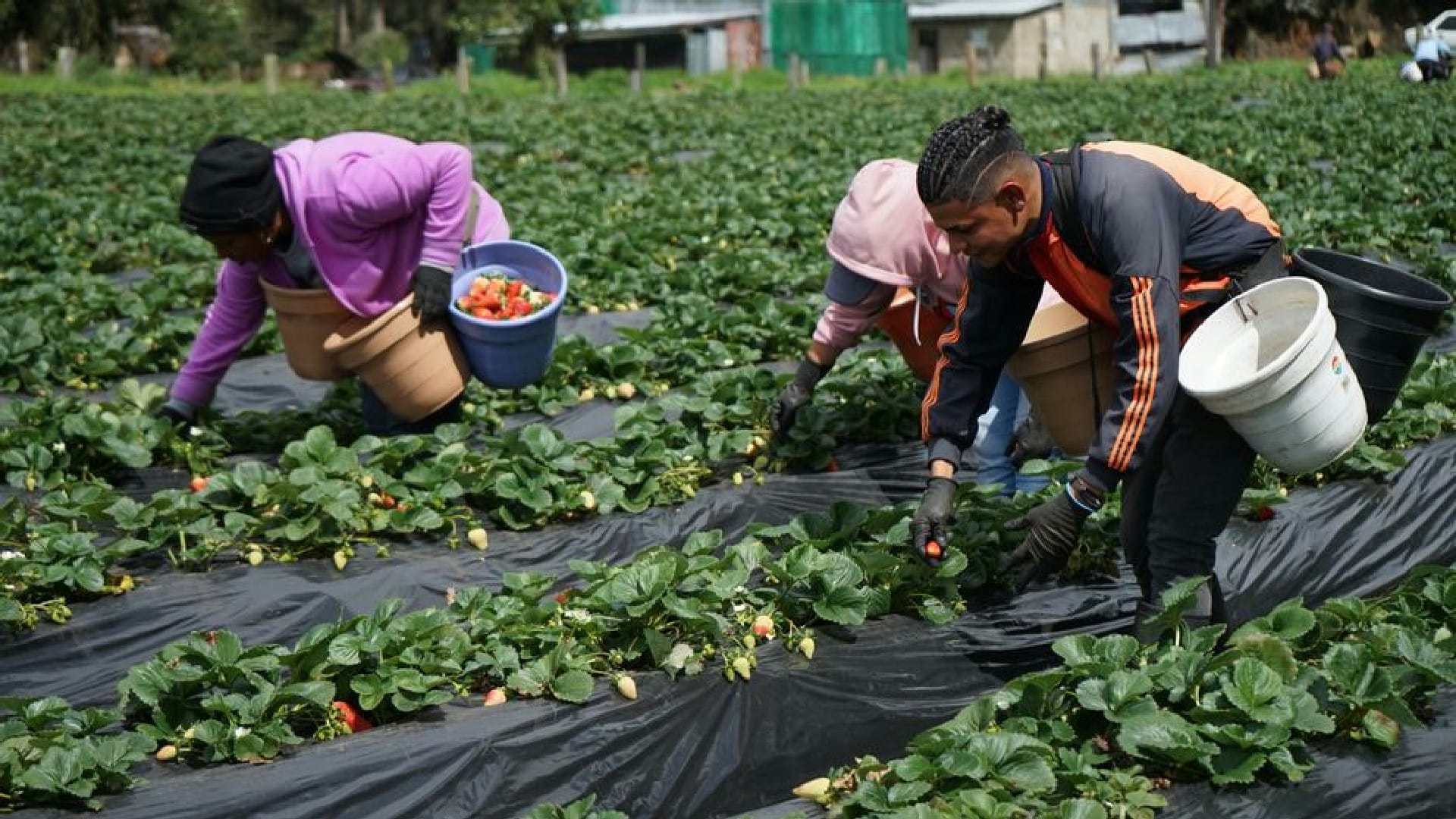
The report also found that strawberries remain the county's top crop, valued at $708.7 million in 2024, but total agricultural revenue has seen zero real growth since 2004. Tourism spending reached $1.93 billion in 2024, with Ojai now outpacing the city of Ventura in bed-tax revenue. Ventura County's nonprofit sector employs about 11,000 people, though at wages averaging just under $50,000, well below the roughly $70,000 average across all employers.
On public health, the county's overall cancer rate ranks seventh highest among California's 28 largest counties, 16% above Los Angeles County's. The report says that gap cannot be explained by the county's older population since the data is age-adjusted.
Ventura County had the lowest overall crime rate of any large California county in 2024. In voter registration, Democrats hold a solid countywide edge, 42.6% to 29.5% Republican. The city remains the only municipality where Republicans outnumber Democrats, 38.4% as of February. Remote work keeps climbing, with 14.1% of county workers primarily working from home in 2023, up from 12.4% the year before.
Councilmember Rocky Rhodes thanked the Civic Alliance for the report at the Aug. 10 meeting, calling it "packed full of actionable data" that now sits on his desk. The alliance will build on this year's findings at its Future of the Region conference on Sept. 14.
Samantha Argabrite, the city manager, is president of the nonprofit's board. The full report is available at civicalliance.org.