Simi Valley Approves $283 Million Budget Despite Economic Headwinds
(CLAIR | Simi Valley, CA) — The City Council approved a $283 million budget for fiscal year 2026-27 on June 8, marking another year of conservative financial planning as national and state economic pressures mount.
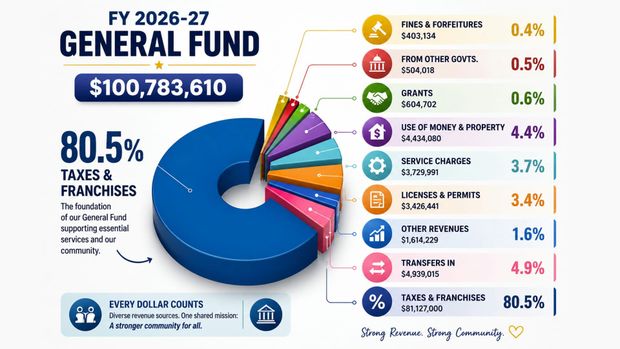
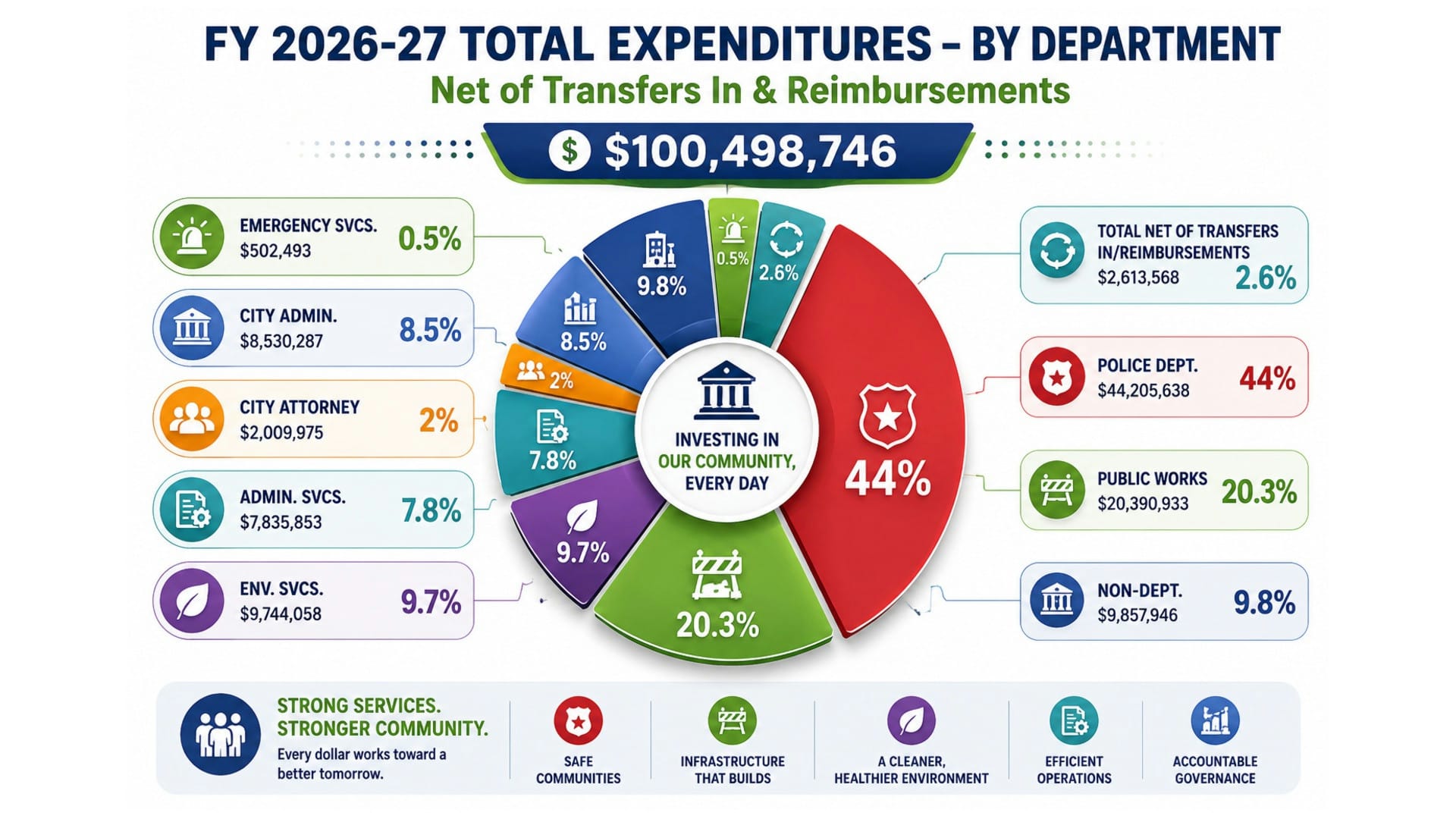
The budget centers around a $100.4 million General Fund that covers police, emergency response, senior services and day-to-day operations. Mayor Dee Dee Cavanaugh called it "a disciplined approach to managing the City's resources while continuing to invest in the services and infrastructure our community depends on every day."
The plan comes as California faces an $18 billion budget shortfall, with structural deficits projected to reach $35 billion annually by 2027-28. Despite these broader challenges, the city projects an $10.75 million surplus from the previous fiscal year, driven by investment earnings and state cost recovery efforts.
City Manager Samantha Argabrite said the budget balances current service needs with long-term fiscal responsibility. The city has maintained its AAA credit rating and strong reserve levels through what officials describe as decades of conservative financial management.
Infrastructure Gets Major Investment
The five-year Capital Improvement Program allocates $27.8 million for infrastructure projects, with $6 million designated for streets and roads improvements across the city. Another $21.4 million targets water and sewer infrastructure, including demolition and replacement of three pump stations at Box Canyon and upgrades to nearly five miles of sewer lines.
The water system will see repairs to aging pipelines and improvements at the Water Quality Control Plant to modernize equipment for wastewater treatment. Residents can track these projects on an interactive map at simivalley.org/cipmap.
Public safety receives nearly $900,000 in new technology, equipment and resources to support officer safety and emergency response capabilities.
Local Economy Shows Resilience
While Ventura County faces economic challenges including housing affordability issues and flat employment projections, Simi Valley's revenue base has remained stable. Sales tax revenues are projected to increase by $2 million, or 8.6 percent, in the coming fiscal year.
The city experienced 9 percent year-over-year sales tax growth in the third quarter of 2025, driven by online marketplace activity, automotive sales, building materials and major retailers. However, some sectors including fuel sales and construction-related businesses showed softer performance due to lending conditions and market uncertainty.
Property tax revenues continue as the city's most dependable income source, having grown for 13 consecutive quarters. Despite a 7.1 percent decline in median home prices from 2025 to 2026, assessed property values remain relatively stable compared to the broader regional market.
Budget Process Emphasized Public Input
The city held a public meeting on May 21 at the Police Department's Emergency Operations Center to gather community feedback before final approval. The meeting provided residents an opportunity to review proposed budget priorities and planned capital projects.
All surplus funds from the previous fiscal year will go toward infrastructure, equipment replacement and one-time projects rather than ongoing expenses. This approach reflects the city's strategy of avoiding structural spending commitments during uncertain economic times.
Economic Context Shapes Planning
National economic conditions continue to influence local planning decisions. Persistent inflation, elevated interest rates and cautious consumer spending create ongoing challenges for businesses and households. California's Legislative Analyst's Office warns that recent revenue growth tied to artificial intelligence and stock market performance may not be sustainable long-term.
According to the 2026 Ventura County Economic Outlook Report (VCEOR,) Ventura County faces particular challenges with housing affordability, as only 17 percent of county households can afford the median-priced single-family home of $930,000 as of February 2026. Total county employment is projected to remain flat through 2027.
Despite these regional pressures, city officials maintain that conservative budgeting practices and strategic planning have positioned Simi Valley to weather economic uncertainty while continuing to provide essential services.
The complete budget document is available on the city's website at simivalley.org/budget, with the full budget book expected online by mid-August. Funding comes primarily from property taxes, sales tax, utility fees and intergovernmental grants.