
(CLAIR | Simi Valley, CA ) -- For nearly a decade, rap was America's default language. It shaped what people wore, watched, bought, and discussed. Every cultural moment ran through hip-hop first. The genre didn't just top the charts—it owned them.
That dominance is ending, and the numbers are stark.
According to Billboard, hip-hop's market share peaked at 30 percent in 2020 and has stagnated at 24 percent through all of 2025—a 20 percent collapse in commercial power in five years.
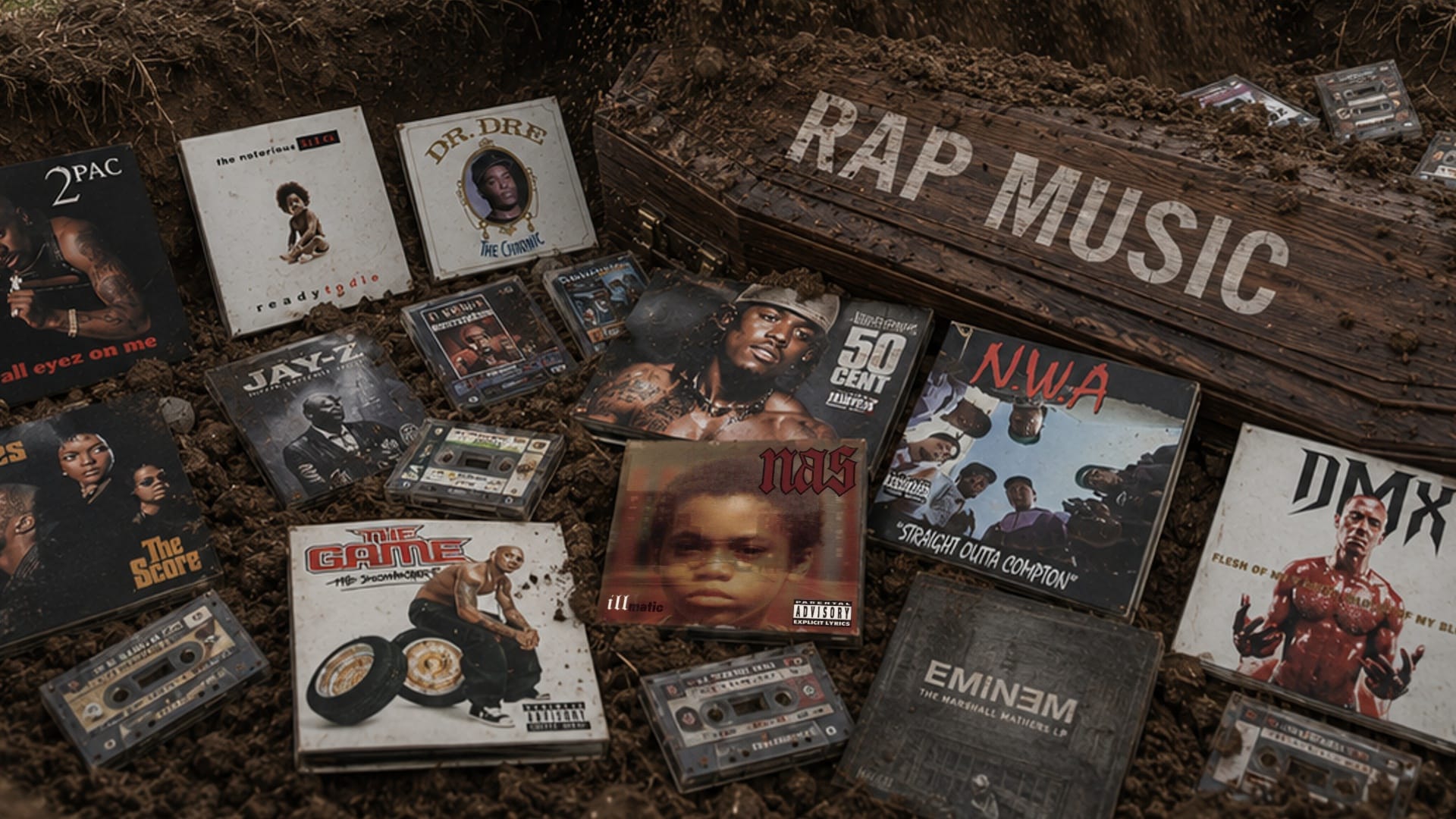
The symbolic moment arrived in late 2025. As Billboard reported, for the first time in more than 35 years—since February 1990, when Nirvana was still an indie band—the Hot 100 Top 40 contained zero hip-hop songs. Only Kendrick Lamar and SZA's "luther" stood in the way of complete disappearance.
But the real story is more brutal than a single chart week. According to Billboard's year-end analysis, just five years ago in 2020, there were three times as many hip-hop titles among the year's biggest hits as there were in 2025. That is not a market correction. That is a 66 percent collapse in mainstream chart presence in half a decade.
The broader picture is even more damning. Industry analysis shows rap's presence on the Hot 100 has fallen from a peak of 30 to 40 percent in the strongest years to as low as 15 to 20 percent in 2023 and 2024—a 50 to 75 percent decline in a single format that once belonged entirely to the genre.
The Album Market Vanished
This is where the crisis becomes undeniable.
In 2016, Drake's "Views" became the first rap album to move 1 million units in the streaming era, an industry milestone that seemed unshakable. Travis Scott's "Astroworld" debuted with 537,000 album equivalent units in 2018. Post Malone's "beerbongs & bentleys" sold 461,000 first week in 2018, marked as the #1 hip-hop debut that year.
By 2026, the floor had collapsed.
According to AceShowbiz reporting on early 2026 releases, J. Cole led all rappers in album sales with his release "The Fall-Off," moving an impressive 280,000 equivalent album units during its initial week, setting the highest benchmark for hip-hop projects in 2026 so far. That represents a 74 percent decline from Drake's streaming-era peak. ASAP Rocky's highly anticipated return with "Don't Be Dumb" secured his third No. 1 album on the Billboard 200, moving 123,000 equivalent album units in its opening week—an 88 percent decline from the 2018 standard.
These are not independent artists struggling. These are establishment names with institutional backing. And they are moving album units at a fraction of what the genre did just eight years ago.
The Pipeline Broke
The most structural problem may be the most overlooked. The industry is not developing new rap superstars anymore.
According to analysis of Billboard's artist trajectories and emerging talent rankings, older established artists like Drake, Kendrick Lamar, and Future continue to command attention, but the emergence of new household-name rappers has slowed to a halt. Emerging acts like GloRilla and Doechii show promise, but neither has achieved sustained top-10 breakthroughs that would indicate the development of the next generation of icons.
This matters because genre dominance is built on a constant renewal of talent. Rock in the 1970s had the Eagles, Fleetwood Mac, Led Zeppelin. Hip-hop in the 2010s had Drake, Kendrick, Travis Scott, Post Malone—a generational cohort that could replenish the charts indefinitely.
In 2025 and 2026, there is no such cohort emerging. The last true breakout was several years past. The pipeline has gone silent.
Meanwhile, country music has done the opposite. Morgan Wallen continued his significant influence in 2025, topping Billboard's year-end charts and becoming the first male country act to lead the list since Garth Brooks in 1993. But beyond Wallen, the genre has elevated a sustained wave of new artists—including Megan Moroney, Zach Top, Ella Langley, Bailey Zimmerman, and Tucker Wetmore, who are reaching new heights and contributing to the genre's dynamism. Each of these artists has built real commercial momentum. Each represents a viable pipeline for the next decade of country dominance.
Rap has no equivalent bench.
What matters is not just the charts. It is what the shift reveals about American culture itself.
The Wardrobe Switched
The aesthetic transformation tells the story better than any statistic. Hip-hop streetwear once dominated youth culture: oversized graphic tees, stacked denim, bold logos screaming for attention. The global streetwear market remained valued at $371 billion in 2025, driven by hip-hop's legacy, but according to fashion analysts at CNN Style, the styling of menswear has fundamentally changed. The "quarter zip"—a fleece from collar to chest—became the unlikely symbol of aspiration for young men in 2025. In one viral video posted in early November 2025, two 22-year-old friends from the Bronx showed the quarter zip's real appeal: when you put it on, you feel more professional. Streetwear retailers like the British fashion house END have shifted focus toward "more preppy and heritage-inspired menswear, including more sophisticated and authentic workwear," according to the company's chief product officer. Streetwear remains part of their offering, but in "a cleaner and more mature" way.
The brands leading this charge aren't the logos of hip-hop's peak. They're outdoors brands. Gorpcore—outdoor gear worn deliberately as everyday style—moved from niche aesthetic to mainstream streetwear staple by 2025, with trail sneakers (Salomon, HOKA) showing up in offices and cafés, and technical shells, fleece layers, and cargo silhouettes integrating into urban outfits. Young people are dressing for function and intentionality, not status signaling. They're choosing restraint over logos. As designer Aaron Levine noted in CNN Style, his design philosophy reflects a response to "the saturation of streetwear and a perceived decline of the quality of luxury goods," with people now "craving something with more soul".
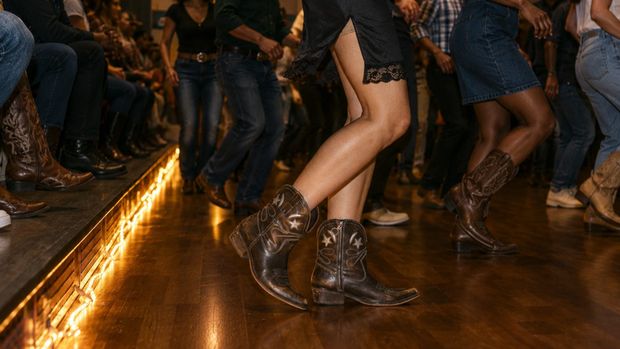
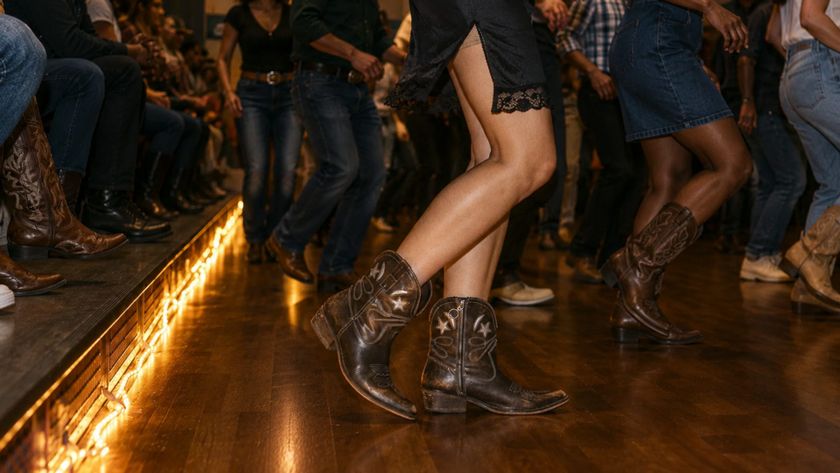
Meanwhile, country aesthetic exploded. Boots, pearl snaps, and heritage workwear moved from rural niche into urban closets. According to Live Nation's global survey of nearly 1,600 country listeners in 2025, Gen Z and millennials now make up 63 percent of country music's fan base. Young people are dressing in thrifted country gear, learning line dances in five minutes at school socials, and building community around participation rather than performance. The two-step is teachable. The twang is learnable. The values are transparent.
The Values Shifted
This is the deeper current. Fashion reflects culture, but culture reflects something more profound: how young people want to be perceived.
Pollsters have documented a significant rightward shift among the youngest voters. According to a Yale Youth Poll from 2026, voters ages 22 to 29 favored Democratic candidates by a margin of 6.4 percentage points, but voters ages 18 to 21 preferred Republicans by a margin of 11.7 points, with researchers noting that those who went through high school during the COVID-19 pandemic are significantly more conservative. According to Campus Reform's reporting on 2025, Gen Z led a "conservative cultural revival," with conservative student organizations filling auditoriums on college campuses and a renewed embrace of faith and family values taking hold.
This is not a traditional conservatism. According to researchers at the George W. Bush Presidential Center, Americans under 30 are less favorable toward capitalism, more likely to embrace LGBT rights, and are the least likely of all age groups to think the United States should take an active role in world affairs. But they are craving authenticity, place-based identity, and relational clarity—precisely what country music offers.
Hip-hop, by contrast, had evolved differently. From its 1980s and 1990s origins as authentic street expression—N.W.A. and Public Enemy confronting police brutality and systemic racism—rap shifted in the late 1990s and 2000s toward glamorizing violence and criminal lifestyles, according to music historians. As research compiled from multiple academic sources noted, youth exposed to rap music containing violent themes showed correlations with increased aggression. The genre that once documented the harsh realities of marginalized communities became, for many listeners, a product optimized for commercial reach—a soundtrack to a lifestyle young people increasingly wanted to reject.
Country music arrived offering the opposite: narrative-driven songwriting, emotional directness, place-based identity and relational clarity. It is a system built for authenticity, not shock value. The lyrics often explore vulnerability—Zach Bryan's stripped-down arrangements, Kacey Musgraves' insistence on authenticity even when blacklisted from country radio, Riley Green's collaboration with Ella Langley on "You Look Like You Love Me," which returned country to its traditional storytelling roots.
The Industry Changed Shape
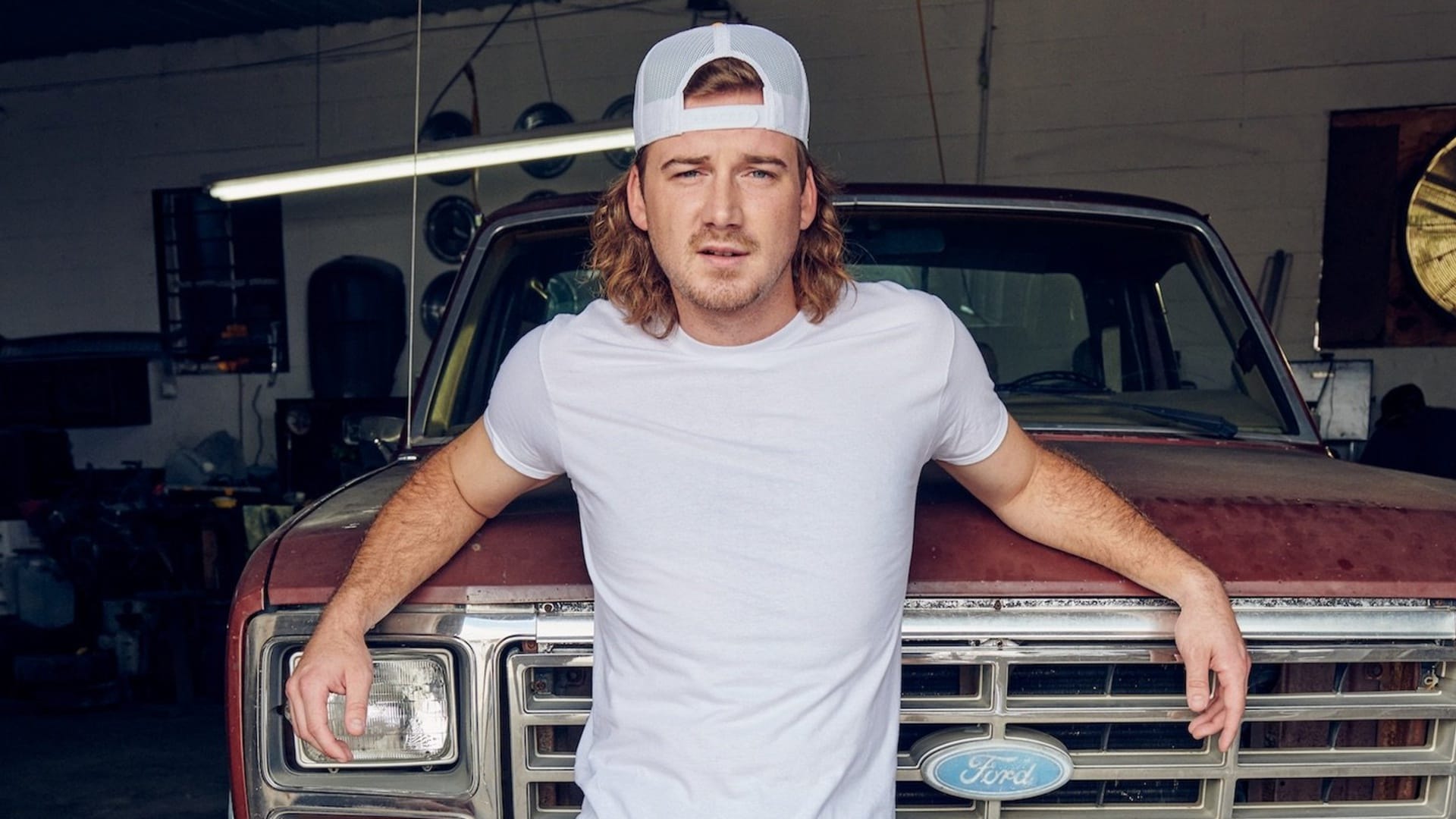
As Billboard reported, Morgan Wallen was named the outlet's top artist of 2025, making him the first male country act to lead the list since Garth Brooks in 1993. Wallen placed more songs on the Billboard Hot 100 during the chart year than any other act in any genre—41 songs total, including at No. 1. One artist. Outpacing every rapper, every pop star, every rock band combined.
As of December 2025, according to Billboard's year-end reporting, Wallen has sold more than 240 million units in the U.S., including over 26 million albums and five Diamond-certified singles—the most ever for a country artist. He ranks as the highest certified country artist and is the third most certified artist of all genres.
The shift wasn't temporary. Country music analytics showed a remarkable 20.3 percent year-over-year increase in consumption in 2023—a significant jump from the 2.5 percent growth in 2022. By the first half of 2025, country music was the most common genre in the Hot 100's top 10.
The audience has transformed, too. Current market data indicates that 51 percent of the U.S. population now listens to country music at least once a month. According to Spotify data, Gen Z country listening has increased 72 percent in recent years. As streaming analysts at Chartlex documented, urban and suburban fans now account for 60 percent of all country listeners—the rural-genre framing is dead. Two out of three country music listeners fall into Gen Z or millennial age brackets, according to Live Nation's 2025 global survey—a fact that surprised industry observers who expected country to remain rooted in its traditional demographics.
This is not the same as saying people stopped listening to rap. Established artists like Drake, Kendrick Lamar, and Future remain among the world's largest streaming artists. According to the latest market analysis, hip-hop/R&B still accounts for 27.3 percent of all consumption in the U.S. The genre remains commercially significant.
What changed is the throne. Popular culture has become decentralized. The biggest movies, sporting events, social media trends, and advertising campaigns no longer require rap to feel current.
The Bigger Story
The bigger story, as music analysts have noted, is creative stagnation coupled with a generational shift in values. For years, mainstream rap converged around similar production, vocal delivery, and lyrical themes. When every new release resembled the previous one, audiences lost interest. They didn't abandon music. They left for somewhere with a different sound—and a different message.
Labels also over-relied on streaming algorithms. Instead of developing distinctive artists, they optimized for playlists and short-term engagement. That strategy produced thousands of songs but far fewer cultural icons. The result is visible: fewer blockbuster albums, fewer new household names, less chart dominance, and lower cultural influence than five years ago.
But there is a deeper explanation. Young people tired of being marketed to while doing the marketing. They grew weary of a cultural product that had become divorced from authenticity. The pandemic shifted their orientation toward conservative-leaning values—not necessarily political conservatism, but a hunger for tradition, family, faith, place, and relational clarity. Country music, with its emphasis on narrative authenticity and emotional directness, arrived at precisely the moment they were searching for something real.
Rap isn't dead. Jazz isn't dead. Rock isn't dead. They simply no longer dominate popular culture. Every genre has a lifecycle. Rock ruled for decades before ceding ground to hip-hop. Hip-hop appears to have passed its peak as the dominant force in mainstream music.
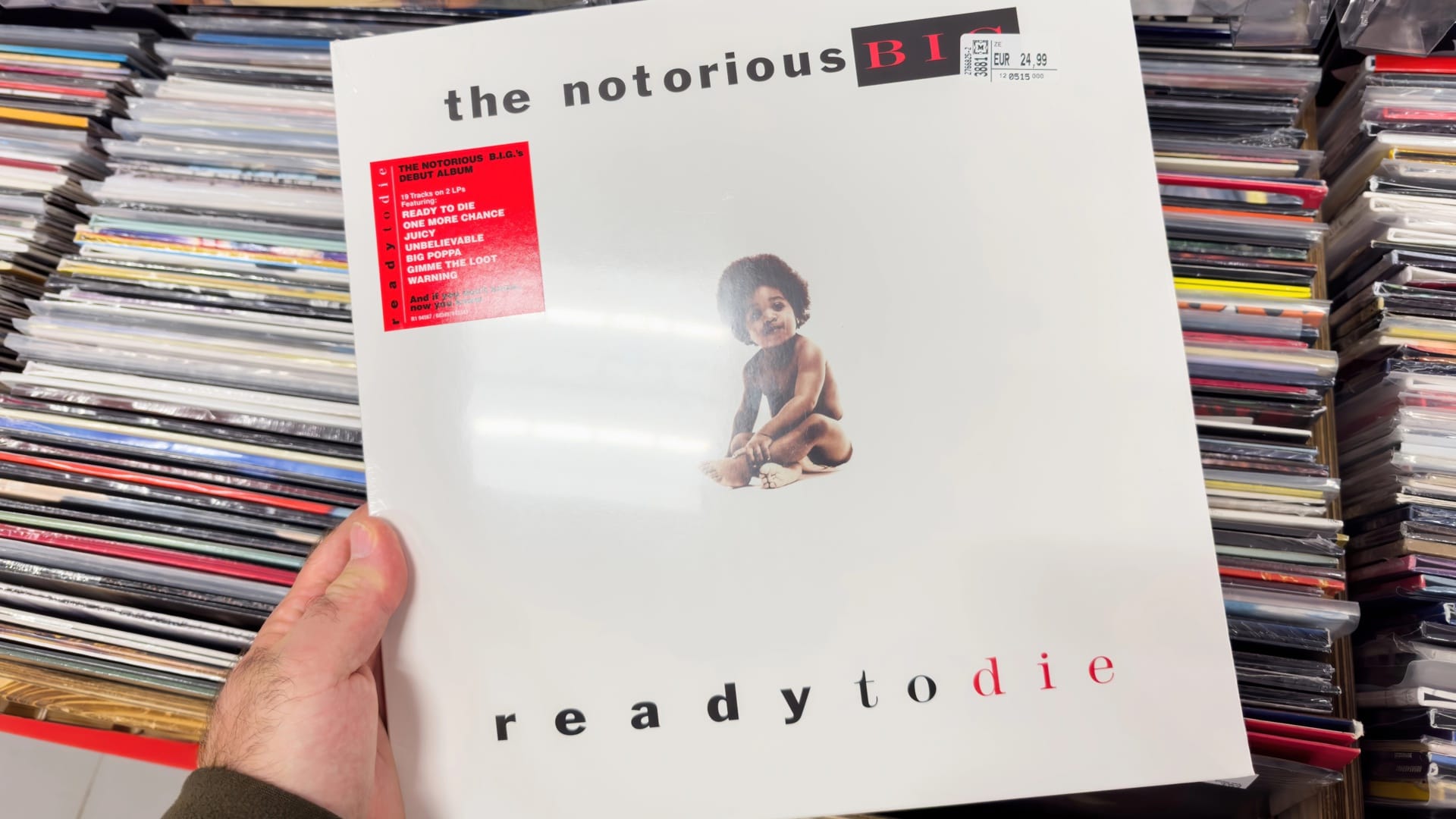
The irony is that rap became a victim of its own success. Once an outsider's voice, it became the establishment. Once rebellious, it became predictable. Once innovative, it became optimized for engagement metrics. It asked young people to aspire to violence, consumption, and status—precisely the things an exhausted generation wanted to escape.
Country music offered something different: a system of meaning built on story, place, and relational clarity. It asked young people to be present. To dance together. To care about something beyond themselves. To believe that their lives mattered in a community, not just in a transaction.
The question is whether this is a temporary correction or the end of an era. Based on current data, the answer appears to be the latter. The absence of new breakthrough stars suggests the former pipeline has genuinely broken, not merely paused. That doesn't mean great rap will stop being made. It means rap is unlikely to command the same overwhelming attention it once did unless something genuinely new emerges—not another variation of existing trends—and the industry develops new artists with the cultural weight to carry a generation.
For the first time in years, popular culture has no single king.
And that may be the biggest story in music today.