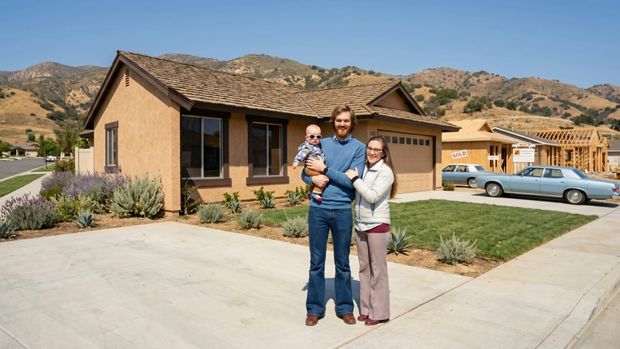
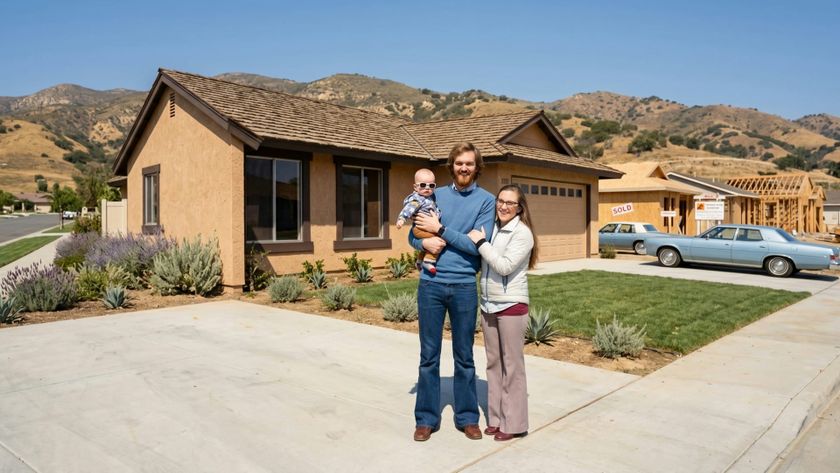
Ventura County Parents and Grandparents and The Economic Reality Your Generation Never Had to Face - It's not laziness. It's California math.
(CLAIR| Ventura County, CA) -- If you're wondering why your 25-year-old is still in their childhood bedroom, or why your college graduate moved back home after trying to make it on their own, here's what you need to understand: they're not failing to launch. You just had it dramatically easier — especially here in Ventura County.
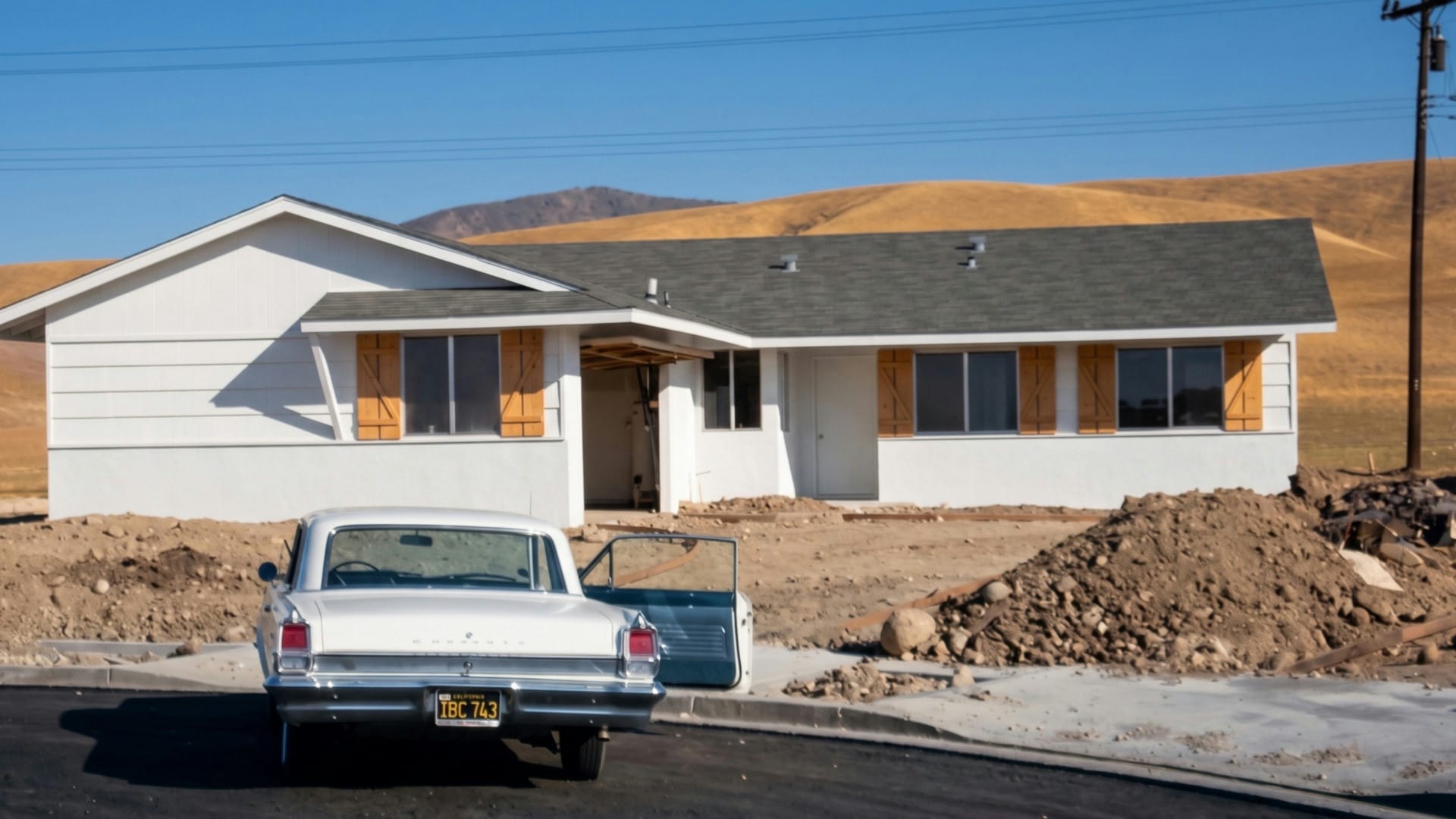
When Houses Cost What Cars Do Now
Let's start with housing, because in California, that's where the math becomes absolutely brutal. Picture this: in 1960, the median home cost $11,900 while the median income was $5,600 — meaning your parents or grandparents needed roughly two years of income to buy a house. In the 1960s, purchasing a house required two years of household income, about what many families today spend on a decent car.
Fast-forward to today's reality, and the numbers tell a devastating story. While median home prices increased by 195% in the West since the 1960s, median household income only increased by 26%. Do that math: the growth rate of home prices is 7.5 times more than the growth rate of household income, making the Western region the least affordable region in the U.S.


By 2024, the annual income needed to afford the median-priced home rose to $126,670. In Ventura County, where the median home price hovers around $800,000, you need substantially more. While 68 out of 100 Americans could afford to buy a home in 1960, only 43 out of 100 Americans can afford to do so now — and in Ventura County, that number is even lower.
But your kids aren't even dreaming about buying homes yet. They're just trying to rent a one-bedroom apartment for $2,800 a month or a studio for $2,200. The housing crisis has become so severe that nearly half of all renters — 21 million households — spend more than 30% of their income on housing. In Ventura County, that percentage is much higher.
The Great Job Application Black Hole
Maybe you're thinking: "When I was their age, I walked into one of the major local employers, shook hands with the manager, and got hired." That world has vanished into what researchers now call the "application black hole."
Here's what the hiring landscape looks like for your children: the applicant-to-interview ratio has plummeted from 15.25% in 2016 to just 3% in 2024. Think about that stunning decline — only around three of every 100 applicants are invited to interview. Your generation had a 1-in-7 chance of getting an interview; today's young adults face 1-in-33 odds.
The situation has become so dire that job seekers now submit anywhere from 100 to 200+ applications before receiving an offer. Imagine your child sitting at their laptop, customizing resume after resume, writing cover letter after cover letter, only to discover that 75% of job seekers never hear back after applying, and you're now 3X less likely to hear back from employers than you were in 2021.
Even worse, 61% of candidates have been ghosted after job interviews, and that number jumped nine percentage points just since early 2024. Your kids are applying to everything from entry-level positions at local universities to retail jobs at shopping centers, biotech companies, and county government positions — and hearing nothing back.
The hiring process itself has become a bureaucratic nightmare. The average time to hire has increased to 68.5 days in 2025 — over two months from application to offer. And here's the kicker: 75% of resumes are automatically rejected by computer systems before any human ever sees them.
The Education Promises That Broke
You probably paid for college at local universities with a summer job, or graduated debt-free from what was then affordable state schools. That's pure fantasy today. The average student loan borrower over 30 owes $13,930, or roughly 19.8% of their annual income. For younger borrowers still in school, average debt is $15,377, representing 39.7% of their annual income.
The cruel irony? Even with degrees from good California schools, recent college graduate unemployment climbed to 5.7% in late 2025, with underemployment at 42.5% — its highest level since 2020. The promise of education leading to stable employment has crumbled: recently, the job-finding rate for young college-educated workers has declined to be roughly in line with the rate for young high-school-educated workers.
The California Inflation Storm
The average annual wage for 20- to 24-year-olds is $41,184, compared to $71,552 for those aged 45 to 54. But in Ventura County, where everything costs more, that $41,184 disappears quickly. Gas costs $4.80+ per gallon. A basic grocery run costs $150. A small apartment starts at $1,800.
The inflation storm has hit young adults particularly hard. Rent increased 6.1% annually over the last five years, compared to 3.6% from 2015 to 2020. In California, it's been even steeper. Meanwhile, California registers 39% of young adults living with their parents — the third-highest rate in the nation.
The generational wealth gap has become a chasm. With stagnant starting wages and minimal asset ownership to protect them from inflation, younger generations face a higher personal inflation rate than older workers who bought homes in the county for $85,000 in 1985 that are now worth $950,000.
When Ventura County Was the Promised Land
When you were starting out in Ventura County, homes had a median value of $17,000 in 1970. Even adjusting for California's higher costs, you could buy a decent house in the county for under $40,000. You could work at manufacturing companies, aerospace, or the growing defense industry and afford a home within a few years.
The typical new home buyer was 33 years old with a household income of $21,600. Today's equivalent would be buying an $800,000 Ventura County house on a $60,000 salary, but you actually need $126,670+ to afford the median home — and more like $180,000+ in Ventura County.
The rental market offers no relief. In most major cities, recent college graduates would be rent-burdened even when sharing a two-bedroom apartment with a roommate. California didn't make the list of affordable metros for college graduates.
The New Normal: Living at Home
The statistics reveal a generation adapting to impossible circumstances. 32.5% of adults ages 18-34 now live with their parents, up from 31.8% in 2023. Nationally, an unprecedented 52% of Americans ages 18 to 29 live with a parent or grandparent — the highest level since the 1940s. In expensive California counties like Ventura, the numbers are higher.
This isn't happening because young adults in the county are immature or entitled. Statistical analysis confirms a clear link between prohibitively expensive housing, especially rentals, and the high prevalence of young adults residing with their parents.
Even the old advice about roommates has lost its power. Living with roommates can reduce housing costs from around 40% of income for a single renter to 20-25% in a shared arrangement, but even splitting a two-bedroom apartment for $3,200 still costs $1,600 per person — nearly half of a typical young adult's take-home pay.
The Economic Earthquake
Your generation built careers when Ventura County was booming. Aerospace, defense, agriculture, and oil provided good-paying jobs with benefits and pensions. You could buy a house in what's now an expensive area for the equivalent of a starter salary.
Today's young adults navigate an entirely different economy. They compete for fewer good jobs as aerospace left, agriculture automated, and most new jobs are in service industries that don't pay enough to live here. The biotech and healthcare jobs that remain require advanced degrees and offer starting salaries that can't touch current housing costs.
The ripple effects reach into personal relationships. Couples increasingly postpone major milestones until reaching economic security, causing the highest median ages at first marriage ever recorded — about 30 for men and 28 for women. In expensive areas like Ventura County, they're waiting even longer.
The Hardest Truth
Your adult children living at home isn't a character flaw. It's a rational response to economic conditions that are fundamentally different from what you experienced, amplified by California's housing crisis. The number of cost-burdened renter households grew to a record 22.7 million in 2024, and California leads this devastating trend.
When you bought your first house in the county, you needed 2-3 years of income. Today's young adults need 10+ years of income for the same achievement in the same neighborhoods. When you job-hunted at local companies, you might have applied to a dozen places and heard back from half. Today's job seekers apply to 100+ positions and hear back from 3%.
Your generation built wealth during California's golden age, when defense jobs paid well, housing was affordable relative to income, and a college degree from a state school was both affordable and valuable. Today's young adults face housing prices that have completely disconnected from wages, a job market that treats applicants like lottery tickets, and student debt loads that didn't exist when state university tuition was minimal.
The California Dream isn't dead, but in places like Ventura County, it now requires family wealth or extraordinary circumstances to achieve what was once ordinary middle-class life. Your kids aren't failing to launch — they're making the smartest financial decision available to them in an economy that no longer rewards the same pathways that worked for you.