Supreme Court Justice Neil Gorsuch Brings Declaration of Independence to Life at Reagan Library
(CLAIR | Simi Valley, CA) — In 1776, a British newspaper declared that Americans had claimed for themselves an unalienable right to speak nonsense. The nonsense in question: that all people are created equal, that their rights come from God and not from government, and that citizens have the power to rule themselves.
Nearly 250 years later, Supreme Court Justice Neil Gorsuch came to the Reagan Library with a timely message: those three ideas are what unite and bind America, and the next 250 years depend on passing them on.
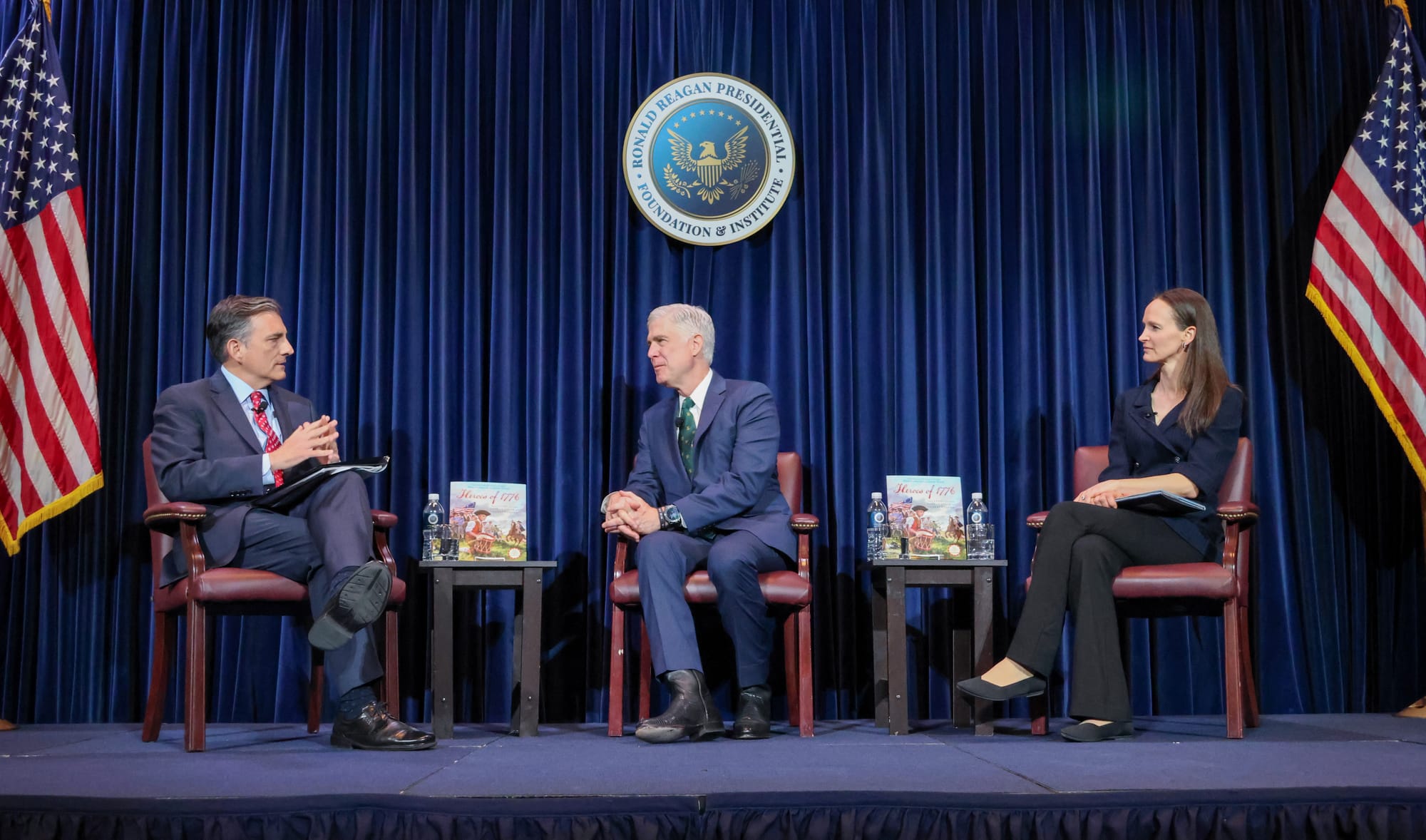
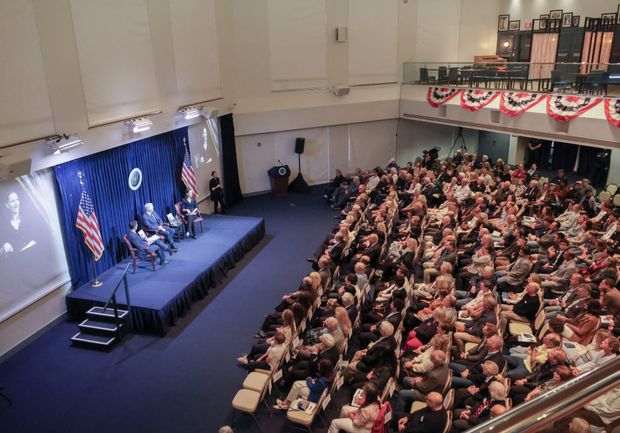
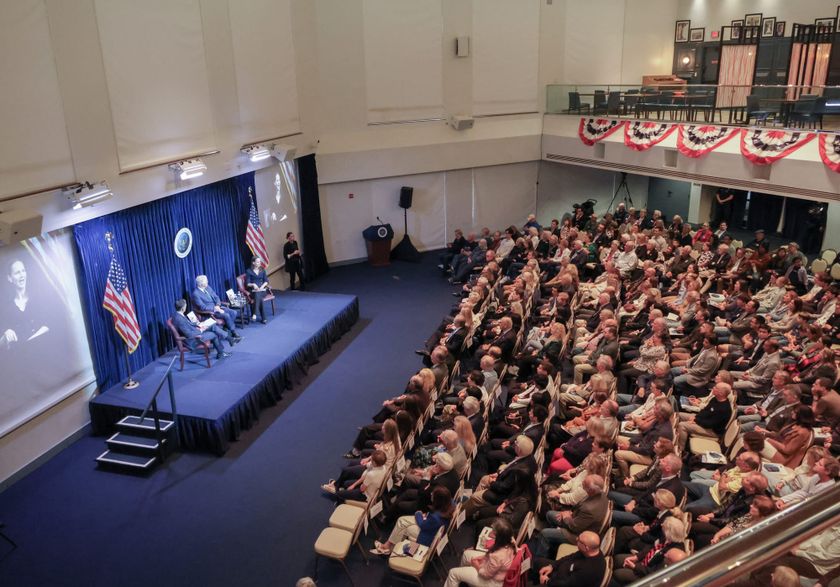
On Tuesday evening at the Ronald Reagan Presidential Library, Gorsuch and his co-author Janie Nitze sat before an audience of students, aspiring lawyers, and community members to discuss their new children's book, "Heroes of 1776: The Story of the Declaration of Independence." The conversation, moderated by Ronald Reagan Presidential Foundation and Institute President and CEO David Trulio, was part of the foundation's Informed Patriotism series.
Gorsuch opened by framing the book's timing around the nation's approaching 250th birthday. "We're about to celebrate our 250th birthday," he said, "and maybe we need to take a moment to reflect on the Declaration that started it all."
He described the document as built on three ideas he called radical for their era: that all people are equal, that rights come from God rather than government, and that citizens have the power to rule themselves. "Nobody in Europe believed them," he said. "The monarchs didn't believe it. The serfs didn't believe it."
The justice was blunt about what the signers risked. Committing to independence in 1776 was an act of treason, punishable by hanging. About a third of the signers lost their homes. Many had their wives and children imprisoned. Some gave away their fortunes and died in poverty before the revolution ended.
"How many people today would risk losing their home, having a spouse imprisoned and being killed for an idea?" he asked.
Nitze explained why the authors chose to tell the story through individual heroes rather than write conventional history. "It's important to remember that the Declaration wasn't inevitable," she said. As late as July 1, 1776, only nine of the 13 colonies voted for independence. Two voted against it, one delegation was tied, and New York declined to vote at all.
Caesar Rodney, a Delaware delegate, was home on military business when the tie needed breaking. He rode through a thunderstorm, through the night, cancer eating away at his face, to cast his vote. Edward Rutledge of South Carolina personally believed the moment was not right for independence but changed his vote for the sake of unity.
"He realized it was more important for us to speak together than for his view to prevail," Gorsuch said.
The book also highlights figures most readers won't recognize. Nitze described Mary Katherine Goddard, a printer in Baltimore who had taken over her brother's newspaper and turned it into a voice of Patriot resistance. When the Second Continental Congress decided in January 1777 to publish the Declaration with all the signers' names attached, they turned to Goddard.
For the first time, she signed her full name: printed by Mary Katherine Goddard. "She was signaling to the world that she too stood on the side of freedom," Nitze said, "and really exposing herself to potentially the same vengeance from the British."
Gorsuch said one story that surprised him most involved Adams and Jefferson. The two began the summer of 1776 as close friends and allies. They did fight over who would write the Declaration, but each wanted the other to do it. Adams finally gave Jefferson three reasons why Jefferson should write it: Virginia needed to be seen leading the effort, Adams described himself as "obnoxious, suspected and unpopular" while Jefferson was "very much otherwise," and Jefferson could "write 10 times better."
"A bit of flattery, a bit of humility, a bit of strategy," Gorsuch said, "and look at what came of it."
The conversation turned to civic education, a subject that clearly bothers Gorsuch. He cited statistics showing only 13% of eighth graders are proficient in U.S. history and only 22% meet the bar for civics. Roughly six in 10 adults would fail the citizenship test.
America, he said, is bound not by shared ancestry or religion but by shared belief in its founding ideas. If those ideas stop being taught, there is nothing else holding it together. His advice to parents was direct: insist that schools teach history and civics, show up and use your voice.
Nitze, whose parents fled Czechoslovakia during the Prague Spring of 1968, offered her own reason for writing for children. She argued that the founders understood the pursuit of happiness not as the pursuit of feeling good, but as the right to pursue a state of being good.
"Quite literally," she said, "our country was founded in order to provide the conditions for its citizens to lead a virtuous life."
Trulio then asked about the Supreme Court itself. Gorsuch noted he had clerked there in 1993, more than 30 years before joining as a justice. "That place hasn't changed at all," he said, "and I love that." He described seeing Clarence Thomas in the hallways dragging his cart, the library cards tucked inside possibly still bearing the names of justices long dead.
What surprises him most is what doesn't surprise him. "It's nine people who love the Constitution who disagree about how to interpret it." About 40% of the roughly 60 to 70 cases the court hears each year are decided unanimously. "I've never heard a word raised in anger in the conference room," he said.
Asked to describe originalism, his interpretive philosophy, Gorsuch kept it plain. An originalist reads a law or constitutional provision the way an ordinary person would have understood it when it was written. The judge's job is not to shape the law around personal views.
"I'm going to honor what's on the page," he said. He told the law students in the room that rule number one for his clerks is don't make things up. Rule number two is the same. "It's we the people," he said, "not we the judges."
The evening closed with a question about Ronald Reagan. Nitze, whose parents escaped communist Czechoslovakia, said Reagan's story was practically read to her at bedtime growing up. She described her family gathering around an old television set to watch footage of the Berlin Wall coming down.
"He stood for an idea of freedom that was just a beacon for them," she said.
Gorsuch pointed to what is inscribed near Reagan's tomb: a belief in the intrinsic worth and dignity of every human being. "Every one of us has some worth and value to add to this world," he said. He cited Reagan's optimism that America's best days were ahead.
"When you have three perfect ideals to strive for," he said, "there's no more noble cause."
The book ends with a line Trulio read aloud to close the program: the torch passes to each new generation to defend the Declaration's ideals and to help make the nation truer to them still.