
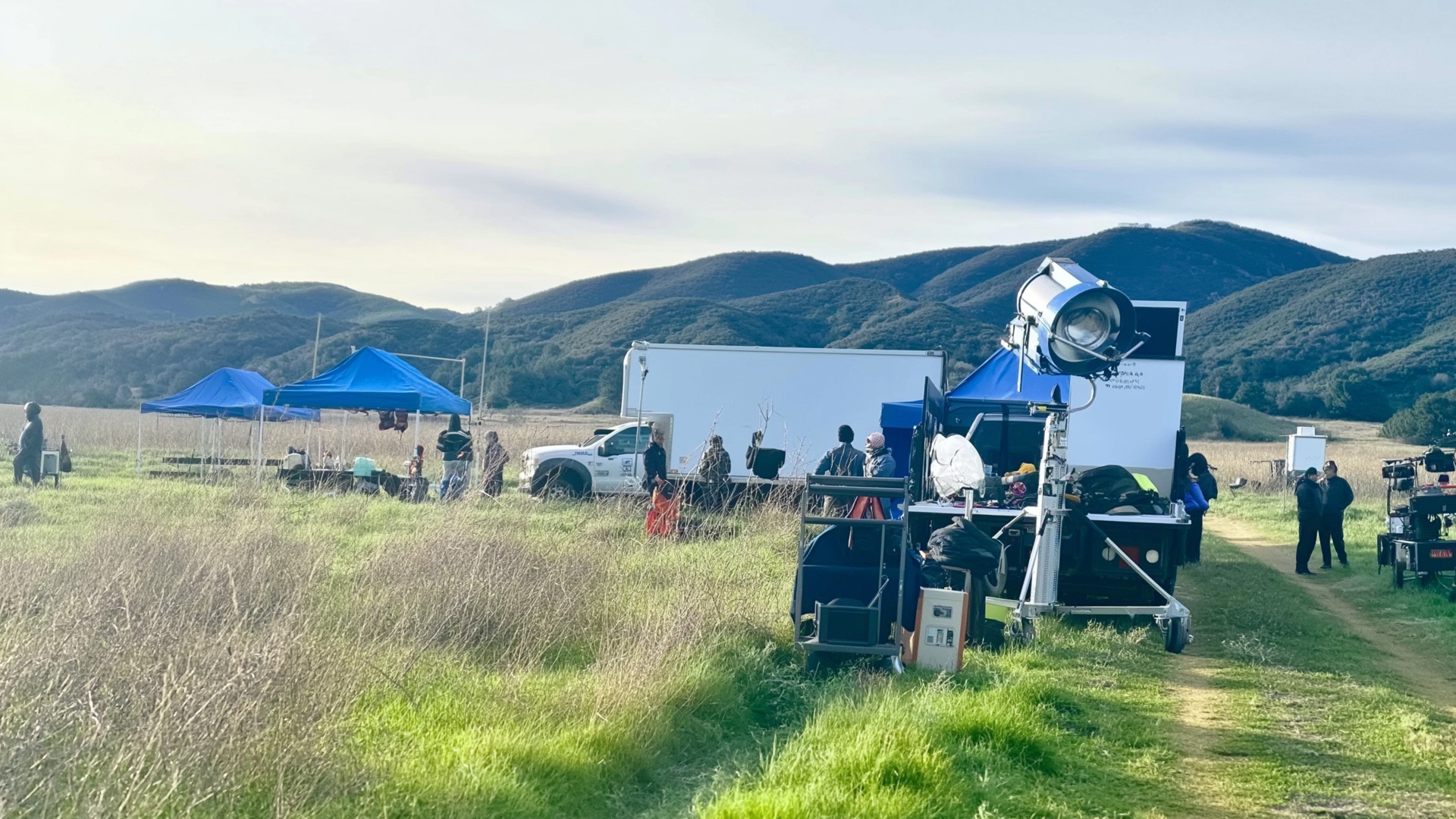
(CLAIR | Simi Valley, CA) – Box trucks pull up before sunrise. Camera carts roll across pavement still cool from the night air. Coffee steams as crews move with purpose, setting marks and checking angles. For long stretches of 2025, that was a familiar rhythm in Simi Valley.

According to a city annual filming report released Jan. 21, productions spent 296 days filming in Simi Valley last year, generating an estimated $5.25 million in economic impact. City officials said 87 productions worked locally, including 15 television shows, 37 commercials, 12 feature films and a range of independent projects.
The activity wasn’t limited to sound stages or remote locations. Film crews regularly relied on nearby restaurants, gas stations, hotels and retailers for meals, fuel, supplies and last-minute needs. Many residents also earned paychecks working on those productions, from production assistants and security staff to drivers, technicians and background performers. Those jobs are part of California’s long-established entertainment workforce and are increasingly competitive to keep in-state.
The city reported that a wide range of projects filmed locally in 2025. Titles included Monster, starring Charlie Hunnam; Countdown; Golf, featuring Will Ferrell and Molly Shannon; Hacks; and The Last Thing He Told Me, featuring Jennifer Garner. Commercial shoots for national brands such as YouTube, Meta, Walmart, Kohl’s, Toyota and Bank of America were also among the productions that chose Simi Valley.

While the finished scenes may appear on screen as taking place “anywhere,” the economic impact is specific and local. Even a single day of filming can bring dozens, and sometimes hundreds, of people into nearby businesses. Permit and location fees generated by filming also contribute to city revenue.
Mayor Dee Dee Cavanaugh described filming as a deliberate part of the local economic strategy. “Film productions bring real benefits, including supporting local businesses and driving economic growth,” she said in the report.
Although total production days in 2025 were lower than the prior year, city officials said filming activity remains steady. Several projects are already scheduled to begin filming this year, including work for Apple TV.
In anticipation of continued demand, the City Council recently formed an ad-hoc committee focused on supporting filming activity and positioning Simi Valley for long-term growth.
The city sits within the Los Angeles 30-Mile Studio Zone, commonly referred to in the industry as the “TMZ,” a designation that can affect union rules, travel time and production costs. That status, combined with a film-friendly permitting process, makes the area an efficient alternative to more congested filming hubs.
Equally important is the breadth of film-ready locations available throughout the community. Productions have access to retail centers, performance venues, parks, open space, distinctive private properties and purpose-built facilities. Among them are the Town Center, Cultural Arts Center, Corriganville Park, Sinaloa Golf Course, Hummingbird Nest Ranch and the Tapo Big House.
Simi is also home to established production infrastructure: Allied Studios & 76 Ranch, Big Sky Movie Ranch and Arroyo West Studios offers a variety of options for film, television and commercial needs. City officials also cited partnerships with the Rancho Simi Recreation and Park District and American Jewish University as expanding the range of available locations.
On screen, Simi Valley may stand in for somewhere else. Off screen, the work is unmistakably local.
Cavanaugh said maintaining a film-friendly environment remains a priority, and city officials believe the approach is paying off. As productions line up for 2026, Simi Valley appears positioned to remain a place where cameras roll — and where the economic benefits of filming stay close to home.


